How to Track Your Crypto Portfolio (Beginner's Guide)
Once your coins live in more than one place — an exchange here, a hardware wallet there — it gets hard to see the whole picture. A portfolio tracker pulls everything together so you know what you hold, where, and roughly what it's worth. This guide covers the main approaches and how to track safely.
The 20-second version
You can track holdings with a simple spreadsheet, a portfolio app, or read-only public addresses. Whatever you choose, never enter a private key or seed phrase into a tracker — view-only access is all it ever needs.
Why track your portfolio
Tracking isn't about staring at gains and losses. It's about clarity: knowing exactly what you own, spotting mistakes, and keeping the records you'll need for tax time in your country.
- See your total holdings across multiple exchanges and wallets in one place.
- Catch errors — like coins sent to the wrong place — early.
- Keep a clean record of buys, sells and transfers for tax reporting.
The main ways to track
There's no single 'best' method — it depends on how much you hold and how hands-on you want to be.
- Spreadsheet — the most private option. You enter holdings by hand. Maximum control, more effort.
- Portfolio app — connects to exchanges or addresses and updates automatically. Convenient, but choose reputable apps only.
- Read-only addresses — paste a public wallet address into a tracker or block explorer to watch its balance without granting any control.
- Exchange dashboards — fine for coins on a single exchange, but they won't show your self-custody wallets.
How to set up a tracker safely
- Decide your method — a spreadsheet for privacy, or a reputable app for convenience.
- If you use an app, prefer connecting via read-only public addresses rather than API keys.
- If you must use exchange API keys, create them with 'read-only' permissions — never enable withdrawal access.
- Add each holding: the coin, the amount, and where it's stored.
- Review periodically and update after every buy, sell or transfer.
A tracker never needs your keys
No legitimate portfolio tool requires your private key or seed phrase. A public address or read-only API key is all it needs to see balances. Anything asking for your seed phrase is a scam — see how to avoid crypto scams.
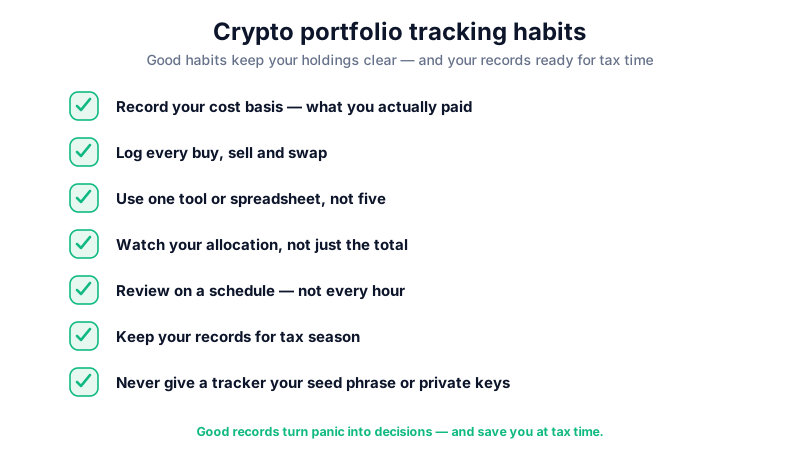
Good tracking habits
A tracker is only as good as the habits around it. Combine it with price alerts so you don't have to check constantly, and keep your security tight.
- Use read-only access wherever possible.
- Turn on two-factor authentication for any tracker tied to your accounts.
- Don't broadcast your total holdings to anyone.
- Remember the displayed value is just a snapshot — crypto is volatile and prices move constantly.
Tracking helps you stay organised and informed. It is not financial advice, and a rising number on a screen is no reason to take on risk you can't afford. If juggling spreadsheets sounds grim, a tracker like CoinTracking pulls every exchange and wallet into one live view.
Key takeaways
- Track to gain clarity and keep clean records — not to obsess over price.
- Spreadsheets are the most private; apps and read-only addresses are more convenient.
- Use read-only access and never enter a seed phrase into any tracker.
- The displayed value is a volatile snapshot, and tracking is not financial advice.
Frequently asked questions
Is it safe to connect a portfolio app to my exchange?
It can be, if you use a reputable app and connect with read-only API keys that have no withdrawal permission. If a tool insists on withdrawal access just to show balances, don't use it.
Can I track a wallet without sharing private details?
Yes. A public wallet address can be pasted into many trackers or a block explorer to monitor its balance. A public address reveals balances but gives no control over the funds.
Do I need to track for tax purposes?
Many countries treat crypto disposals as taxable events, so good records help. Rules vary by country, so check your local tax authority's guidance or a qualified professional.
Keep reading
How to Set a Crypto Price Alert (Step by Step)
Price alerts notify you when a coin hits a level you choose, so you don't have to watch charts all day. Learn
How to Read a Candlestick Chart (Beginner's Guide)
Learn how to read crypto candlestick charts: what each candle's body, wicks and colour mean, common timeframes
How to Set Up a Withdrawal Whitelist (Step by Step)
A withdrawal whitelist (or address allowlist) limits crypto withdrawals to addresses you've pre-approved. Lear