Stablecoin Risks Explained
Stablecoins are designed to hold a steady $1, which makes them feel safe. But 'stable' describes a goal, not a guarantee — and every stablecoin carries real risks. This guide walks through them plainly so you understand exactly what you're trusting when you hold one.
The 20-second version
Stablecoins can lose their peg, depend on an issuer holding real reserves, are exposed to changing regulation, and — when used to earn 'yield' — add lending and smart-contract risk. They're useful, but they are not the same as money in a bank, and they carry no deposit insurance.
Depeg risk
The headline risk is a depeg — when a stablecoin drifts away from $1. It can be brief and recover, or it can be permanent. USDC fell to around $0.87 for a weekend in March 2023; UST collapsed to near zero and never recovered.
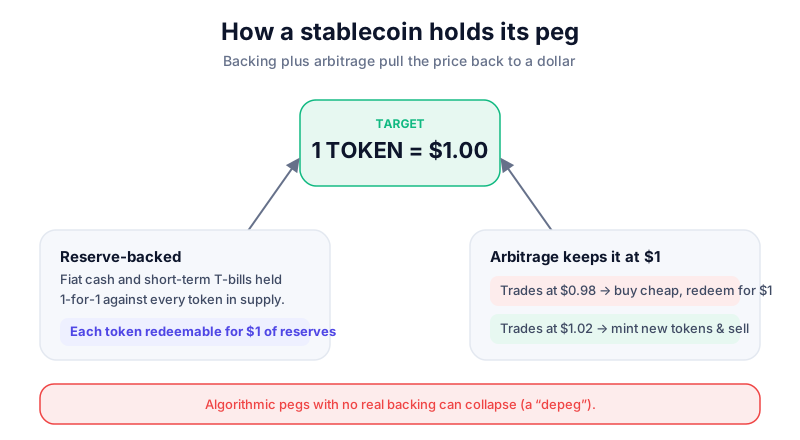
A peg holds because people believe the token is worth $1 and can redeem it for that. When either of those breaks down, the price can move fast — and a stablecoin's whole point is that it isn't supposed to.
Issuer and reserve risk
For fiat-backed coins like USDT and USDC, you're trusting a company to actually hold the reserves it claims and to honour redemptions. That raises several questions worth asking of any stablecoin.
- Are reserves real and sufficient? Look for regular reserve reporting, and note the difference between an attestation and a full audit.
- What are reserves held in? Cash and short-term government debt are lower-risk than riskier assets.
- Where are reserves held? If the bank or custodian fails, the peg can wobble — exactly what happened to USDC in 2023.
- Can you actually redeem? Direct redemption is often limited to large or verified customers.
Not a bank deposit
A stablecoin is not a bank account. There's no deposit insurance behind it, and if the issuer or its reserves run into trouble, you could lose value. Treat it accordingly.
Regulatory and freezing risk
Stablecoins sit squarely in regulators' sights worldwide, and the rules are still evolving. New laws could change how stablecoins are issued, who can use them, and what backing they must hold.
There's also a feature many people don't realise: most centralised stablecoin issuers can freeze or blocklist addresses, often to comply with law enforcement. That's reassuring against theft, but it means the tokens aren't as unstoppable as some assume.
Smart-contract and 'yield' risk
Holding a stablecoin in your own wallet earns nothing. Any advertised 'yield' on a stablecoin comes from lending or staking it through a platform — and that adds a fresh layer of risk on top of the coin itself. Whichever way you lean, the storage rule doesn't change: serious amounts belong offline, on a hardware wallet like the Ledger Nano X.
- Smart-contract risk — bugs or exploits in DeFi protocols can drain funds.
- Counterparty risk — a lending platform can fail, freeze withdrawals, or misuse deposits.
- 'Too good to be true' risk — outsized 'stable' yields helped destroy Terra/Luna.
Education, not advice
This guide is education, not financial advice. Stablecoins can lose their peg and carry no government guarantee. Be especially wary of any 'stable' product promising high returns — that usually signals hidden risk. Only risk what you can afford to lose, and never borrow to buy crypto.
Key takeaways
- Stablecoins can depeg — briefly, like USDC in 2023, or permanently, like UST.
- Fiat-backed coins depend on an issuer truly holding reserves and honouring redemptions.
- They're not bank deposits: no insurance, and most issuers can freeze addresses.
- Earning 'yield' on a stablecoin adds smart-contract and counterparty risk — high returns are a red flag.
Frequently asked questions
Are stablecoins safe?
They're more stable than other crypto, but not risk-free. They can depeg, depend on issuers holding real reserves, face changing regulation, and carry no deposit insurance. This is education, not advice.
What's the biggest stablecoin risk?
There isn't one single answer — depeg risk is the most visible, but it usually stems from reserve, issuer, or design problems underneath. For algorithmic coins, the design itself is the core risk.
Can a stablecoin issuer freeze my funds?
Most centralised issuers can blocklist addresses, often for legal compliance. It protects against some theft but means the tokens aren't fully censorship-resistant.
Keep reading
What Is a Stablecoin? How the Peg Works (and Fails)
A clear guide to stablecoins: how they aim to hold a steady value, the different types, and the very real peg
What Is USDT (Tether)? A Plain-English Guide
A clear, balanced guide to USDT (Tether) — what it is, how the world's biggest stablecoin stays near $1, who i
What Is USDC? A Plain-English Guide
A clear, balanced guide to USDC — the regulated dollar stablecoin from Circle. How it stays at $1, how its res