The Terra/Luna Collapse: What Happened and Why It Matters
In May 2022, one of crypto's largest projects collapsed almost overnight. TerraUSD (UST), an algorithmic stablecoin meant to hold $1, lost its peg and triggered a 'death spiral' that destroyed both it and its partner token, LUNA — wiping out tens of billions of dollars. This is a factual account, told as a cautionary lesson, not to assign blame or to comment on anyone's intentions.
The 20-second version
Terra's UST tried to hold $1 using an algorithm and a partner token, LUNA, instead of real reserves. A high-yield programme drew in huge deposits. When UST slipped below $1 in May 2022, panic set off a spiral that crashed UST and LUNA to near zero within days.
What Terra and UST were
Terra was a blockchain ecosystem whose centrepiece was TerraUSD (UST), an algorithmic stablecoin designed to track $1. Unlike USDC, UST wasn't fully backed by dollars. Instead it relied on a mechanism tied to a second, freely-trading token called LUNA.
The system let users swap $1 of UST for $1 of LUNA and vice versa. In theory, that arbitrage would always nudge UST back to $1: if UST fell below a dollar, traders could swap it for a full dollar of LUNA and pocket the difference.
The role of high yield
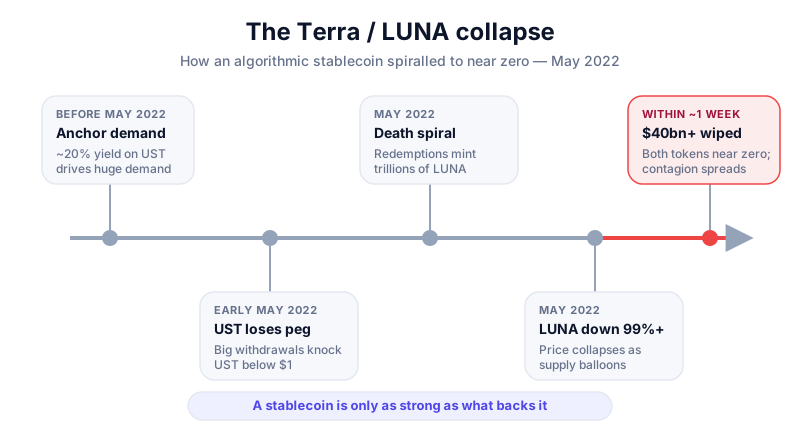
Much of UST's demand came from a lending platform in the Terra ecosystem called Anchor, which offered around 20% annual yield on UST deposits — far above anything in traditional finance. That eye-catching rate pulled in enormous sums.
Why a 20% 'safe' yield is a warning sign
A near-20% return on something marketed as a stable, dollar-pegged asset was extraordinary — and extraordinary yields have to be paid from somewhere. When a 'stable' product advertises returns far above normal interest rates, that's a reason for caution, not excitement.
How it unravelled
In early May 2022, large amounts of UST were sold in a short window, and UST slipped below its $1 peg. Confidence cracked. As holders rushed to exit by swapping UST for LUNA, the system minted enormous quantities of new LUNA — and that flood of supply crushed LUNA's price.
- The depeg — UST fell under $1 and the arbitrage mechanism failed to restore it.
- The mint flood — exits created huge new LUNA supply, collapsing its price.
- The spiral — a falling LUNA destroyed the backing meant to defend UST, accelerating both crashes.
Within roughly a week, UST was worth a few cents and LUNA had fallen from tens of dollars to a fraction of a cent. An estimated tens of billions of dollars in value evaporated, and the shock spread across the wider crypto market. If this story leaves one habit behind, make it this: keep long-term holdings in your own cold storage — a Keystone 3 Pro — not on any platform's balance sheet.
The lessons that lasted
The Terra collapse became a defining cautionary tale. It didn't prove all stablecoins are doomed — fiat-backed ones like USDC kept working — but it showed in brutal terms how fragile an under-backed, confidence-dependent design can be.
- 'Stable' is a goal, not a guarantee — a name on a token tells you nothing about its safety.
- Backing matters — an asset held up mainly by a partner token and belief can fail fast.
- Unusually high yield is a red flag — outsized returns usually mean outsized hidden risk.
- Contagion is real — one big failure can drag down unrelated assets across the market.
Education, not advice
This is a factual case study, not financial advice and not a comment on anyone's character or intent. The plain lesson stands: never put in money you can't afford to lose, never chase a 'stable' product offering returns that seem too good to be true, and never borrow to buy crypto.
Key takeaways
- TerraUSD (UST) was an algorithmic stablecoin propped up by a partner token, LUNA, not real reserves.
- A ~20% yield on Anchor drew in huge deposits — an early warning sign in hindsight.
- In May 2022 a depeg triggered a death spiral that crashed UST and LUNA to near zero in days.
- The lasting lesson: 'stable' is a goal, not a guarantee, and outsized yields signal outsized risk.
Frequently asked questions
How much money was lost in the Terra/Luna collapse?
Estimates put the destroyed value in the tens of billions of dollars across UST, LUNA and the wider market shock — one of the largest losses in crypto history.
Why did UST collapse so fast?
Because it relied on confidence and a partner token rather than full reserves. Once panic started, the system minted huge amounts of LUNA, crashing its price and removing the backing — a self-reinforcing 'death spiral'.
Could it happen again?
Similar algorithmic designs carry the same fragility. Fiat-backed stablecoins work differently, but no stablecoin is risk-free. See our stablecoin risks guide.
Keep reading
Algorithmic Stablecoins Explained
What algorithmic stablecoins are, how they try to hold a peg without full backing, why they're so risky, and w
What Is a Stablecoin? How the Peg Works (and Fails)
A clear guide to stablecoins: how they aim to hold a steady value, the different types, and the very real peg
Stablecoin Risks Explained
Stablecoins aim for $1, but they aren't risk-free. A clear, balanced guide to depeg risk, issuer and reserve r