What Are NFT Royalties? How Creator Resale Fees Work
NFT royalties are payments that go back to a creator each time their work is resold. They're one of the most talked-about features of NFTs — and one of the most misunderstood, because they aren't guaranteed by the blockchain itself. This guide explains how they work, why enforcement is contested, and what it means for both creators and buyers.
The 20-second version
Royalties are a percentage a creator can earn on every resale of their NFT. They're set when the NFT is created, but they're enforced by marketplaces, not the blockchain — so whether a creator actually gets paid depends on where the resale happens.
What NFT royalties are
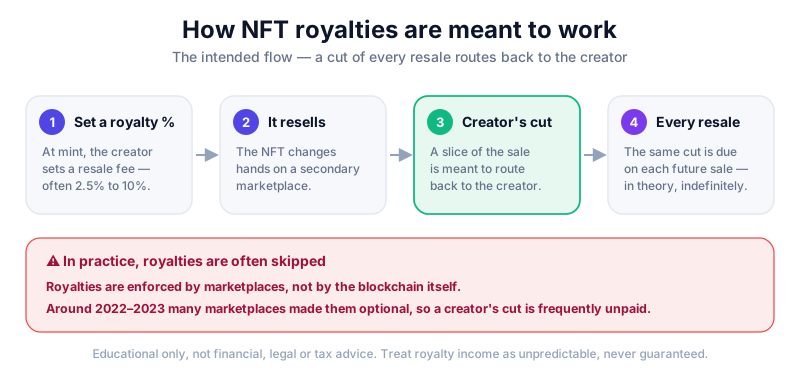
When someone mints an NFT, they can attach a royalty — say 5% or 10%. The idea is that every time the item changes hands afterwards, that percentage flows back to the original creator. It's an attempt to give artists ongoing income from a secondary market, something the traditional art world rarely offers.
For creators, this can be a meaningful draw: a single artwork that keeps trading could pay out for years. For buyers, the royalty is simply part of the cost baked into a resale.
Why royalties aren't always paid
Here's the catch that surprises most people: royalties are usually not enforced by the blockchain itself. A standard NFT smart contract records who owns the token, but the royalty payment is typically applied by the marketplace at the point of sale. If a sale happens somewhere that doesn't honour royalties — or directly between two wallets — the creator may get nothing.
This became a major debate around 2022–2023, when several marketplaces made royalties optional to attract traders with lower costs. Some platforms and creators responded with tools that block royalty-skipping marketplaces, but there's no single industry standard.
Read the listing carefully
If you're buying, check whether a marketplace honours creator royalties — it affects the true cost. If you're a creator, understand that a stated royalty is a request that depends on where your work trades, not a guarantee.
What it means for creators and buyers
- Creators should set royalties when minting, but shouldn't count on them as reliable income — enforcement varies.
- Buyers should factor any royalty into the resale price they're willing to pay.
- Both should remember that on-chain ownership and off-chain copyright are different things; a royalty doesn't transfer rights.
If you're minting your own work, our how to mint an NFT guide shows where royalties are set during the process. And treat valuable NFTs like any other asset: they can sit behind a hardware wallet like the SafePal S1, safely offline.
The bigger picture
Don't treat royalties as guaranteed earnings
NFT markets are highly speculative and volatile, and royalty income is unpredictable and often unenforced. Never make financial commitments based on expected royalties. This is education, not financial advice — only risk what you can afford to lose.
Key takeaways
- Royalties are a percentage creators can earn on each resale of their NFT.
- They're enforced by marketplaces, not the blockchain — so they're not guaranteed.
- Optional-royalty marketplaces sparked an ongoing industry debate.
- Treat royalty income as unpredictable, never as guaranteed earnings.
Frequently asked questions
How much are NFT royalties usually?
They're commonly set somewhere between 2.5% and 10%, though the creator chooses the figure when minting. Higher royalties can deter some buyers.
Can a creator change the royalty after minting?
Generally no — the royalty is set in the original listing or contract. What can change is whether a given marketplace chooses to honour and pay it.
Do I have to pay the royalty when I resell?
It depends on where you sell. Some marketplaces enforce royalties automatically; others make them optional or skip them entirely. Always check before listing.
Keep reading
What Is an NFT Marketplace? A Beginner's Guide
A plain-English guide to NFT marketplaces: what they are, how buying and selling works, the main platforms, fe
How to Mint an NFT (Step by Step)
A beginner's step-by-step guide to minting an NFT: choosing a chain, setting up a wallet, uploading your work,
NFT Scams Explained: How to Spot and Avoid Them
The most common NFT scams — fake mints, wallet-draining approvals, phishing, rug pulls and counterfeits — and