What Is a Crypto Transaction?
Sending crypto looks as simple as a bank transfer, but underneath, something quite different is happening. This guide walks through what a crypto transaction actually is — and why one rule, irreversibility, makes care so important.
The 20-second version
A transaction is an instruction to move crypto, signed by your private key, broadcast to the network, and permanently recorded on the blockchain once confirmed. It usually costs a fee and, once confirmed, can't be reversed.
The life of a transaction
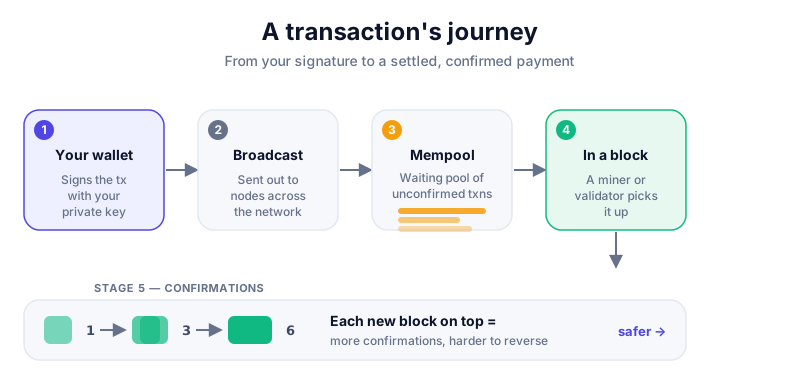
When you hit 'send', your wallet builds a transaction and signs it with your private key — proving you're authorised without revealing the key. The signed transaction is broadcast to the network's nodes, which check it follows the rules.
- Your wallet creates the transaction: who's sending, who's receiving, how much, and the fee.
- It's signed with your private key to prove it's genuinely yours.
- The transaction is broadcast to the network and waits in a pool of pending transactions.
- A miner or validator includes it in a block through consensus.
- Once in a block, it's 'confirmed' — and each new block on top makes it more final.
Fees and confirmations
Most networks charge a fee to process a transaction, which goes to the miners or validators who secure the chain. When the network is busy, fees rise; when it's quiet, they fall.
A 'confirmation' means your transaction has been included in a block. More confirmations mean more certainty it won't be reversed. For small payments one or two confirmations is usually enough; for large amounts, people often wait for several. And however you weigh the trade-offs, keep meaningful holdings in cold storage — a Keystone 3 Pro — rather than on an exchange.
There's no undo button
Confirmed transactions can't be reversed
Unlike a bank, no one can claw back a crypto transaction. Send to the wrong address or fall for a scam, and the funds are almost always gone for good. Always double-check the address, and send a small test amount first when moving large sums. This is education, not financial advice.
Key takeaways
- A transaction is a signed instruction to move crypto, recorded on the blockchain.
- Your private key signs it; the network confirms it through consensus.
- Fees pay the miners or validators and rise when the network is busy.
- Confirmed transactions are irreversible — always double-check the address.
Frequently asked questions
How long does a crypto transaction take?
It depends on the network and how busy it is — from seconds on fast chains to many minutes on Bitcoin during congestion. Paying a higher fee can speed things up.
Can I cancel a transaction after sending?
Once confirmed, no. Some networks let you 'replace' a still-pending transaction with a higher fee, but a confirmed transaction is permanent.
Why do I have to pay a fee?
Fees reward the miners or validators who process and secure transactions, and they stop the network being spammed with junk.
Keep reading
Public and Private Keys Explained
The pair of keys behind every crypto wallet, in plain English: what each one does, how they keep your coins yo
Gas Fees for Beginners
Why crypto charges 'gas' fees, what makes them go up and down, and simple ways to avoid overpaying — explained
What Is a Blockchain Node?
Nodes are the computers that keep a blockchain running and honest. Here's what they do, the main types, and wh