What Is Avalanche (AVAX)? A Plain-English Guide
Avalanche is a public blockchain platform designed for speed and low fees, with its own cryptocurrency called AVAX. This is lesson one of our six-part Avalanche course, and the right place to start. By the end you'll know what Avalanche actually is, how it's put together, what AVAX does day to day, and — just as importantly — how to think about it with a clear head, before you spend a single penny. We'll keep the jargon to a minimum and explain it when we can't avoid it.
The 20-second version
Avalanche is a 'layer-1' blockchain — a base network like Ethereum or Solana — built for fast, cheap transactions and smart contracts. Its token, AVAX, pays fees and secures the network. It's known for splitting work across three specialised chains and letting projects launch their own custom networks called subnets.
What is Avalanche?
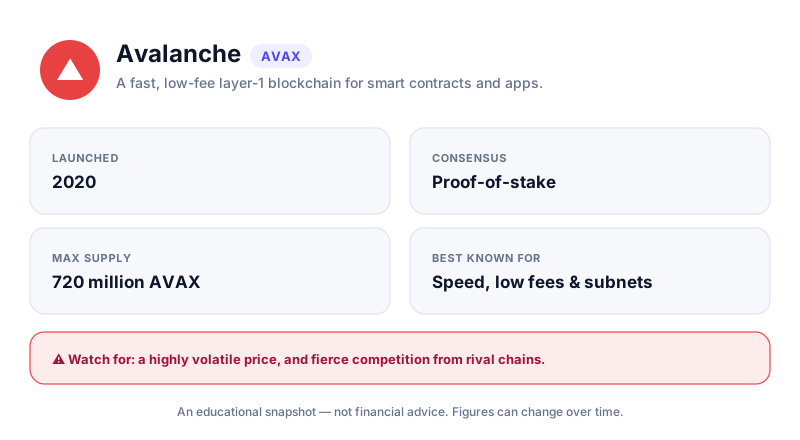
Avalanche is a layer-1 blockchain platform — a base network that other applications run on, in the same family as Ethereum and Solana. It launched in 2020, built by a team at Ava Labs that spun out of research at Cornell University, and it was designed from day one to settle transactions quickly while keeping fees low. The name is a clue to how it works: it aims to reach agreement the way a snowball becomes an avalanche — a small nudge that rapidly sweeps the whole network along to the same answer.
If that still sounds abstract, here's an everyday analogy. A blockchain is a shared notebook that thousands of computers around the world keep an identical copy of. When you send AVAX, every copy gets updated at once, so nobody can spend the same coin twice or quietly rewrite history. A 'layer-1' is the original notebook itself — the foundation — not a note scribbled in the margins of someone else's. Avalanche is one of those original notebooks, and AVAX is the currency written inside it.
Like Ethereum, Avalanche supports smart contracts — small programs that live on the blockchain and run exactly as written, with no company sitting in the middle deciding what happens. The classic way to picture a smart contract is a vending machine: put the right coin in, the agreed snack drops out, and you never have to trust a shopkeeper to keep their word. That predictability is what lets people build decentralised apps, new tokens, and DeFi services on top of Avalanche. Its native cryptocurrency, AVAX, is the coin that pays for all of this activity and helps keep the network honest.
What makes Avalanche genuinely distinctive is its structure. Rather than cramming every job onto one single chain — which is exactly how networks get congested and fees suddenly spike — it splits the work across three chains that each have a clear, separate role, and it lets teams spin up their own purpose-built networks alongside them. Don't worry about the detail yet; we unpack all of it in the next lesson, how Avalanche works. For now, just hold onto the headline: speed, low fees, and a divide-and-conquer design.
What AVAX is used for
It's easy to blur 'the network' and 'the coin' into one thing, but they do different jobs and it pays to keep them straight. Avalanche is the platform — the roads and the rules. AVAX is the token that keeps that platform running — the fuel and the tolls. AVAX has three core jobs, and once you understand them you understand most of why it exists at all:
- Paying fees — every transaction and smart-contract action costs a small amount of AVAX, much like paying a tiny toll to use a road. Sending tokens, swapping on an exchange, minting an NFT — each one nibbles a fraction of a coin.
- Securing the network — people lock up (or 'stake') AVAX as a kind of good-behaviour deposit to help validate transactions. Behave honestly and you earn rewards; misbehave or vanish and you forfeit some upside. We explain the whole system in Avalanche staking explained.
- Governance and access — AVAX is what you use to create new networks (subnets) and to take part in certain on-chain decisions about how the platform is run.
Supply works differently from Bitcoin, which is capped at a hard 21 million coins forever and never budges. AVAX has a maximum supply of 720 million tokens, released gradually over time — but with a twist. A portion of every fee is burned: sent to an address that nobody can ever spend from, permanently taking those coins out of circulation. So new AVAX is created through staking rewards while some is destroyed through everyday use, and the two forces pull in opposite directions. Please don't read that as 'the price must therefore go up'. Supply is only one ingredient in any price, and demand — the far bigger and far less predictable one — could easily push the other way.
Why people use Avalanche
Avalanche's two big selling points are speed and cost. Transactions typically finalise in a second or two — and 'finalise' is the important word, meaning they're truly settled and can't be reversed, not just sitting there 'pending'. Fees are usually a small fraction of Ethereum's notorious gas fees, which can balloon to genuinely eye-watering sums when that network is busy. Cheap, fast transactions matter most for things that happen a lot: trading, gaming, and any app that needs thousands of tiny actions rather than a handful of big, occasional ones.
There's a second, quieter reason developers like it. Avalanche's C-Chain is compatible with Ethereum's tooling, which in plain terms means a developer who already built an app for Ethereum can move it across with relatively little rework — same code, same wallet standards, a cheaper home to run in. That low switching cost is a huge part of why a whole DeFi and app ecosystem has grown up around Avalanche rather than the network sitting around empty. Builders go where it's easy to build, and users follow the apps.
A fair warning
AVAX's price is highly volatile and can fall sharply with little notice, and newer smart-contract platforms carry extra risks — bugs, exploits, and projects that quietly fail. Only ever risk what you can afford to lose, and never borrow to buy crypto. This guide is education, not financial advice, and nothing here is a prediction or a recommendation to buy.
The honest risks
We started LatestCrypto because the internet is drowning in people who'll cheerfully tell you a coin is 'going to the moon' and conveniently forget to mention the downsides. So here are the downsides, plainly and without the marketing gloss. No blockchain is risk-free, and it's worth being clear-eyed about Avalanche before you go a step further:
- Competition is fierce. Avalanche competes head-on with Ethereum, Solana, and dozens of others all chasing the same developers and the same users. There's no law of nature that says any single platform 'wins', and today's frontrunner can quietly become tomorrow's footnote.
- Smart-contract risk. Apps built on Avalanche can contain bugs or be exploited, and that's entirely separate from the security of Avalanche itself. A solid foundation doesn't make every house built on top of it safe.
- Concentration. A meaningful share of AVAX, and of the validators that secure it, can sit with insiders, early backers, and large holders. That's something to research for yourself, not something to wave away because a chart looks pretty.
If you understand those trade-offs, you're ready for the rest of the course — and we'll keep that same honest voice throughout. Next up is how Avalanche works, which lifts the bonnet on those three chains and the clever consensus that ties them together. After that we cover how to buy AVAX sensibly and — the part people rush and later regret — how to store it safely. One lesson at a time, no hype, no shortcuts. And however you weigh the trade-offs, keep meaningful holdings in cold storage — a Keystone 3 Pro — rather than on an exchange.
Key takeaways
- Avalanche is a layer-1 smart-contract platform built for speed and low fees.
- Its token, AVAX, pays fees, secures the network, and creates new subnets.
- Its C-Chain is Ethereum-compatible, so apps move across easily.
- AVAX is volatile and faces strong competition — only risk what you can afford to lose.
Frequently asked questions
Is Avalanche the same as Ethereum?
No, but they're cousins in spirit — both are programmable blockchains for smart contracts. Avalanche aims for faster, cheaper transactions and uses a genuinely different design under the hood, which we cover in how Avalanche works. 'Different' doesn't mean 'better' or 'worse', just a different set of trade-offs.
Do I need a whole AVAX to start?
No. AVAX is divisible into tiny fractions, so you can hold a few pounds' worth if you want. Just remember any amount, large or small, can fall sharply in value — owning a fraction doesn't make it any less volatile per pound.
What's the safest way to hold AVAX?
For anything beyond pocket money, a hardware wallet that keeps your keys offline is the gold standard. Buy one only from the manufacturer, and never share your seed phrase with anyone, ever — no legitimate service will ever ask for it.
Keep reading
How Avalanche Works: Three Chains, Subnets & Consensus
A clear look under the hood of Avalanche: the X, C and P chains, what subnets are, and how Avalanche consensus
How to Buy Avalanche (AVAX): A Step-by-Step Guide
A careful, beginner-friendly walkthrough of how to buy AVAX safely: choosing an exchange, verifying your accou
How to Store Avalanche (AVAX) Safely
Keep your AVAX safe from hackers and mistakes: hot vs cold wallets, hardware wallets, the C-Chain, seed-phrase