What Is Circulating Supply?
Supply is half of what sets a coin's market cap, yet it's the half most beginners ignore. Knowing the difference between circulating, total and maximum supply helps you spot which coins still have a wave of new tokens waiting to hit the market.
The 20-second version
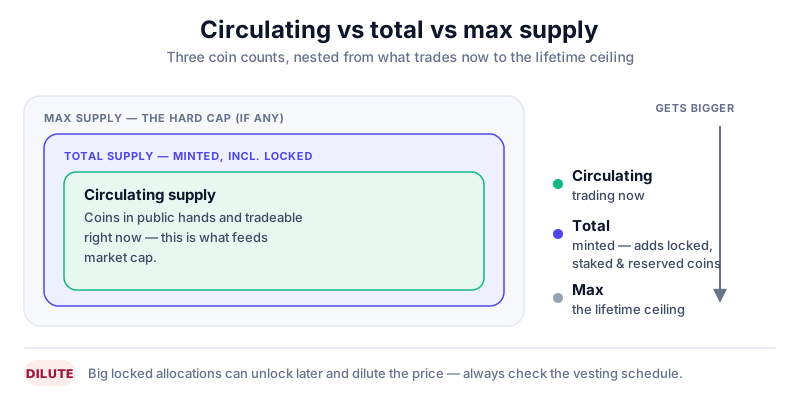
Circulating supply is the number of coins available to the public right now. Total supply includes coins that exist but are locked or reserved. Max supply is the most that will ever exist. Circulating supply is what feeds market cap.
Three numbers, three meanings
- Circulating supply — coins currently in public hands and tradeable. This is the figure used to calculate market cap.
- Total supply — all coins that exist today, including ones locked, staked or held in reserve, minus any that have been burned.
- Max supply — the hard ceiling. Bitcoin's is 21 million; many coins have no cap at all.
Why it changes the picture
Two coins can trade at the same price but be worth wildly different amounts depending on how many coins are in circulation. Supply is also dynamic: some networks mint new coins as rewards (inflationary), while others permanently destroy coins in a process called burning (deflationary).
When more coins enter circulation without matching demand, each existing coin can be worth less. That's why supply schedules matter as much as the headline price.
The unlock you didn't see coming
Many newer projects release coins gradually to teams, investors and the treasury on a fixed schedule. These token unlocks raise the circulating supply on set dates and can add selling pressure. A coin's circulating supply being a small fraction of its total is a signal to check the unlock schedule before assuming today's market cap tells the whole story. And however you weigh the trade-offs, keep meaningful holdings in cold storage — a Keystone 3 Pro — rather than on an exchange.
Supply data isn't always exact
Circulating-supply figures are estimates and can differ between data sites, especially for lost or locked coins. Treat them as a guide. Crypto is volatile — only risk what you can afford to lose. This is education, not financial advice.
Key takeaways
- Circulating supply is what's tradeable now and drives market cap.
- Total supply adds locked and reserved coins; max supply is the lifetime ceiling.
- Inflationary coins mint more over time; deflationary ones burn coins.
- Check token-unlock schedules before trusting a young coin's market cap.
Frequently asked questions
Why isn't circulating supply the same as max supply?
Many coins release gradually over years through mining, staking rewards or scheduled unlocks. Until then, plenty of coins simply don't exist yet or are locked away.
Do burned coins count?
No. Burning permanently removes coins from supply by sending them to an unspendable address, so they drop out of both total and circulating supply.
Keep reading
What Is Market Cap in Crypto?
Market capitalisation explained in plain English: how it's calculated, why it matters more than price, and the
Understanding Crypto Volatility
Why crypto prices swing so hard: the causes of volatility, what it means for you, and how to keep a level head
What Is Bitcoin? A Plain-English Guide
A beginner-friendly explanation of what Bitcoin is, how it works, and how to think about it — with no hype and