What Is DAI? The Decentralised Stablecoin Explained
DAI is a stablecoin that targets $1 like USDT and USDC — but it works very differently. Instead of being run by a single company holding dollars, DAI is created by users locking up crypto as collateral, governed by a decentralised protocol. This guide explains how that works in plain English, and where the risks lie.
The 20-second version
DAI is a stablecoin that aims to be worth $1, but it's backed by crypto collateral locked in smart contracts rather than dollars in a company's bank account. It's a cornerstone of DeFi — more decentralised than USDT or USDC, but with its own distinct risks.
What makes DAI different
Most stablecoins are fiat-backed: a company holds dollars and issues tokens against them. DAI is crypto-collateralised instead. It was created by the Maker protocol (now part of the Sky ecosystem) on Ethereum, and it isn't issued by a single firm holding cash.
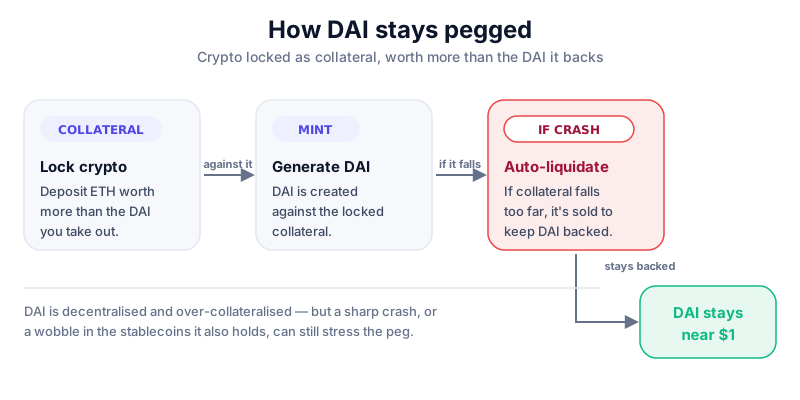
DAI comes into existence when users lock up crypto — and some real-world assets — as collateral in smart contracts, then generate DAI against that collateral. The system is governed by holders of a separate governance token who vote on its settings.
How DAI stays near $1
Because crypto collateral is itself volatile, DAI is over-collateralised: you must lock up more value than the DAI you generate. If your collateral falls too far in value, the system can automatically sell it to keep DAI fully backed.
- Over-collateralisation — more collateral value backs each DAI than the DAI is worth, creating a buffer.
- Liquidations — if collateral drops below a required level, it's auctioned to cover the debt.
- Incentives and arbitrage — protocol settings and trader arbitrage push DAI back toward $1 when it drifts.
An honest nuance
Over time DAI has come to hold a meaningful amount of centralised stablecoins like USDC among its backing. So DAI is more decentralised than USDT or USDC — but it isn't purely independent of them. That's worth knowing rather than glossing over.
Risks to understand
DAI removes the single-company trust that USDT and USDC require, but it trades that for a different set of risks — covered fully in our stablecoin risks guide. And however you weigh the trade-offs, keep meaningful holdings in cold storage — a Trezor Safe 5 — rather than on an exchange.
- Smart-contract risk — DAI depends on code; a bug or exploit could threaten the system.
- Collateral risk — sharp crashes in the backing crypto can stress liquidations.
- Indirect centralisation — exposure to USDC and other assets means DAI isn't fully insulated from their problems.
- Governance risk — decisions are made by token-holder votes, which can change how DAI works.
Education, not advice
This explains how DAI works; it's not a recommendation to use or hold it. Stablecoins can lose their peg and carry no government guarantee. Only risk what you can afford to lose, and never borrow to buy crypto.
Key takeaways
- DAI is a decentralised stablecoin backed by crypto collateral, not dollars in a bank.
- It stays near $1 through over-collateralisation and automatic liquidations.
- It's more decentralised than USDT or USDC, but holds some of them among its backing.
- Its main risks are smart-contract bugs, collateral crashes and governance changes.
Frequently asked questions
Who controls DAI?
No single company. DAI is governed by a decentralised protocol where governance-token holders vote on key settings, and it's created by users locking up collateral.
Is DAI safer than USDT or USDC?
It's different, not simply safer. It avoids single-issuer risk but adds smart-contract and collateral risk, and has indirect exposure to centralised stablecoins. This isn't advice to pick any of them.
Why is DAI called over-collateralised?
Because more value is locked up as collateral than the DAI generated against it, creating a safety buffer against the volatility of the backing crypto.
Keep reading
What Is a Stablecoin? How the Peg Works (and Fails)
A clear guide to stablecoins: how they aim to hold a steady value, the different types, and the very real peg
What Is USDT (Tether)? A Plain-English Guide
A clear, balanced guide to USDT (Tether) — what it is, how the world's biggest stablecoin stays near $1, who i
What Is USDC? A Plain-English Guide
A clear, balanced guide to USDC — the regulated dollar stablecoin from Circle. How it stays at $1, how its res