What Is Polkadot (DOT)? A Plain-English Guide
Polkadot is a network designed to let many different blockchains work together and share security. Instead of one chain trying to do everything, Polkadot connects specialised chains so they can talk to each other. This guide explains what Polkadot is in plain English, how it works under the hood, what the DOT token does, and how to think about it without the hype.
The 20-second version
Polkadot is a 'network of blockchains'. A central chain (the Relay Chain) provides shared security, while connected chains called parachains handle the actual work. DOT is the token used for staking, governance, and connecting chains.
What is Polkadot?
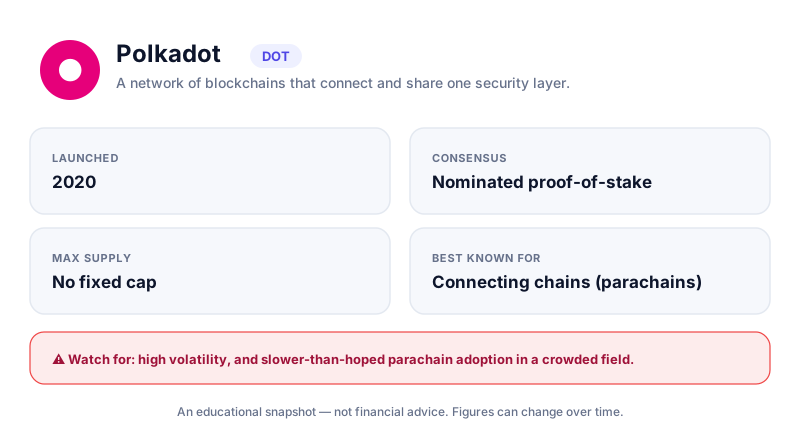
Polkadot is a project that launched in 2020, founded by Gavin Wood — one of the co-founders of Ethereum and the author of its original technical specification. Its big idea is interoperability: helping separate blockchains share data and value instead of operating as isolated islands.
Most blockchains are self-contained. Bitcoin doesn't naturally know what is happening on Ethereum, and vice versa. Polkadot was built to solve that by acting as a kind of hub that many chains can plug into, where they automatically share a single, strong security layer.
The native token of the network is called DOT. It is used to secure the network through staking, to vote on changes through governance, and to win slots for the connected chains.
How Polkadot works
Polkadot's design has a few core pieces. Once you understand these, the rest of the project makes sense.
- The Relay Chain is the heart of Polkadot. It provides shared security and coordinates the whole network, but deliberately keeps its own features minimal.
- Parachains are independent blockchains that connect to the Relay Chain. Each can be tuned for a specific purpose — gaming, finance, identity — while borrowing the Relay Chain's security. We cover these in detail in our parachains guide.
- Validators stake DOT to confirm transactions and secure the Relay Chain.
- Nominators back trustworthy validators with their DOT and share in the rewards.
Because every connected chain shares the Relay Chain's security, a small new project doesn't have to recruit its own miners or validators from scratch — a task that is hard and expensive to do safely. This 'pooled security' model is one of Polkadot's defining features.
A hardware wallet keeps your keys offline and out of reach of hackers. The Ledger Nano X is a popular choice and supports DOT — but read our full review first.
What the DOT token is for
DOT isn't just something to trade. It has specific jobs inside the network, which is worth understanding before you form any view of it.
- Staking — DOT is locked up to help secure the network, and stakers can earn rewards for doing so. Learn more in Polkadot staking explained.
- Governance — DOT holders can propose and vote on changes to how the network runs, including upgrades, without contentious hard forks.
- Bonding — DOT is committed to connect and maintain parachains on the network.
This means demand for DOT is tied to how the network is actually used, not just to speculation — though, as with all crypto, price is driven by many factors and can move sharply.
Strengths and criticisms
Supporters point to Polkadot's shared-security model, its on-chain governance and upgradeability, and its focus on connecting many chains rather than competing to be the single 'world computer'.
Critics note that the multi-chain ecosystem can be complex for newcomers, that adoption of parachains has been slower than some hoped, and that Polkadot competes in a crowded field alongside Ethereum layer-2s, Solana, Cosmos and others. The technology has also continued to evolve, which can make older explanations go out of date.
A fair warning
DOT's price is highly volatile and the project is still developing. Only ever risk what you can afford to lose, and never borrow to buy crypto. This guide is education, not financial advice, and nothing here says DOT is a good or bad investment.
Where to go next
Now you know what Polkadot is, sensible next steps are understanding parachains, seeing how to buy DOT safely, and — most importantly — learning how to store it safely. If you're curious about earning rewards, read Polkadot staking explained.
Key takeaways
- Polkadot connects many blockchains so they can share security and data.
- The Relay Chain secures the network; parachains do the specialised work.
- DOT is used for staking, governance, and connecting chains.
- DOT is volatile and the project is still maturing — only risk what you can afford to lose.
Frequently asked questions
Is Polkadot the same as Ethereum?
No. Both can run apps, but Polkadot focuses on connecting many specialised chains under shared security, while Ethereum is a single chain with its own ecosystem of layer-2s. They take different approaches to scaling.
What's the difference between Polkadot and Kusama?
Kusama is Polkadot's 'canary network' — a near-identical live network used to test features and run experiments before they reach Polkadot. They are separate networks with separate tokens (KSM and DOT).
What's the safest way to store DOT?
For larger amounts, a hardware wallet that keeps your keys offline is the gold standard.
Keep reading
How to Buy Polkadot (DOT) Safely: Step by Step
A safe, beginner-friendly walkthrough for buying Polkadot (DOT): choosing a reputable exchange, verifying your
How to Store Polkadot (DOT) Safely (Step by Step)
Keep your Polkadot (DOT) safe from hackers and mistakes: hot vs cold wallets, hardware wallets, seed-phrase ba
Polkadot Parachains Explained (Plain English)
What parachains are, how they connect to the Polkadot Relay Chain, why shared security matters, and how chains