What Is PulseChain? A Plain-English Guide
PulseChain is a blockchain that launched in 2023 as a copy — or 'fork' — of Ethereum, with its own coin called PLS. This first lesson sets up the whole course: what PulseChain actually is, where it came from, and why it's one of the more divisive projects in crypto. We'll keep it honest, plain-English, and free of the hype you'll find almost everywhere else. By the end you'll have the lay of the land — enough to follow the rest of the course without nodding along to jargon you haven't met yet.
The 20-second version
PulseChain is an Ethereum-compatible blockchain founded by Richard Heart. It works much like Ethereum but with cheaper fees and a separate coin, PLS. It has an enthusiastic community and serious critics — including an SEC complaint against its founder that a US court later dismissed on jurisdictional grounds (the SEC did not refile). Treat it as higher-risk and do your own research.
What is PulseChain?
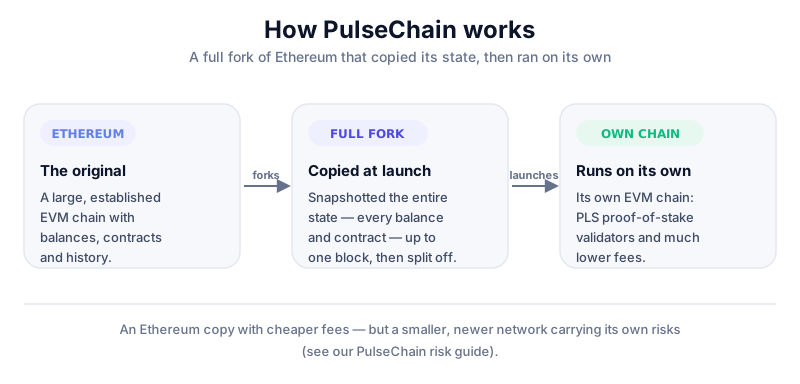
PulseChain is a 'layer 1' blockchain — its own independent network, the same category as Bitcoin or Ethereum rather than something built on top of them. It went live in May 2023. Technically it's a fork of Ethereum: it copied Ethereum's software and even took a snapshot of its entire history, then started running as a separate chain with its own native coin, PLS.
If 'layer 1' is a new phrase, here's the short version: it just means a base blockchain that settles its own transactions and doesn't depend on another chain underneath it. Bitcoin is a layer 1. Ethereum is a layer 1. PulseChain is too. The opposite would be a 'layer 2', which rides on top of a layer 1 to make it faster or cheaper. PulseChain didn't take that route — it built a whole separate base chain instead, which is a much bigger undertaking and a much bigger thing to take on trust.
Here's a useful analogy. Imagine you photocopied an entire town — every house, every resident's bank balance, every shop — and rebuilt it next door as a brand-new town with a new currency. Day one, the copy looks identical. But from that moment the two towns live separate lives: different shops open, different money changes hands, different prices. That's roughly what a chain fork does, and it's why your Ethereum past was mirrored onto PulseChain but everything since is independent. The two towns share a history but not a future.
Because it shares Ethereum's design, PulseChain is EVM-compatible — EVM being the 'engine' Ethereum uses to run apps. In practice that means apps and tools built for Ethereum can run on PulseChain with little or no change, the same way a game written for one console runs on an identical model. The pitch from supporters is simple: a familiar Ethereum-style experience with much lower transaction fees. Whether 'familiar and cheaper' is worth the trade-offs is the question this whole course helps you answer — and we unpack the mechanics behind it in the next lesson, how PulseChain works.
Who created it?
PulseChain was founded by Richard Heart (real name Richard Schueler), a well-known and polarising figure in crypto. Before PulseChain he launched HEX, a controversial token that promised eye-watering returns to people who locked their coins up, and later PulseX, a decentralised exchange tied to the PulseChain ecosystem. The three projects are closely intertwined and closely tied to one man — which, as we'll see, is part of what makes the whole thing contentious.
That single-founder design isn't a trivial detail. Most of the big, broadly trusted networks spread their decision-making across foundations, independent dev teams and large validator sets — so no one person can sink or steer the whole thing. PulseChain leans the other way. When a network's reputation, marketing and direction all flow through one prominent individual, you're effectively trusting that person as much as the technology. That can cut both ways, but it concentrates risk, and it's worth holding in mind from the very start.
Heart raised funds for PulseChain through a large 'sacrifice' phase, where participants sent crypto to certain addresses to 'signal support' in exchange for an expectation of future PLS. The unusual framing — calling a fundraise a 'sacrifice' rather than a sale — and how the proceeds were used later drew regulatory attention. We cover that honestly, without taking sides, in the final lesson on PulseChain's risks and controversy.
We report, you decide
Our job here is to describe PulseChain factually and fairly — neither shilling it nor sneering at it. Strong opinions exist on both sides, and plenty of people online are paid (one way or another) to hold one of them. Read widely, then make up your own mind.
How it differs from Ethereum
If you already understand Ethereum, PulseChain will feel familiar — it's the same machine with a different badge on it. The headline differences are worth knowing before you read anything else:
- Cheaper fees — transactions cost a fraction of what they do on Ethereum mainnet. This is the single thing supporters point to most, and it's a genuine, measurable difference.
- A separate coin (PLS) — PLS is used to pay fees, much as ETH is used for gas on Ethereum. ETH and PLS are different assets with different prices; owning one does not mean you own the other.
- A smaller, newer network — fewer validators securing it, fewer apps to use, and far thinner liquidity (less money flowing through), which matters a lot when you try to buy or sell.
- A single, prominent founder — Ethereum has a large foundation and thousands of independent developers; PulseChain is tightly associated with one person, which concentrates both the credit and the risk.
A quick word on 'liquidity', because it'll come up again and again. Liquidity just means how much buying and selling is happening — how easy it is to swap your coins for something else without moving the price against yourself. A deep, liquid market is like a busy high street: you can buy or sell a lot and barely shift the price. A thin market is like a tiny village shop — try to buy or sell in size and the price lurches. PulseChain is much closer to the village shop than the high street, and that has real consequences when you actually trade.
None of those differences is automatically good or bad. Cheaper fees are nice; a thinner, founder-led network is riskier. The honest summary is that PulseChain trades some of Ethereum's safety-in-numbers for lower costs — and whether that trade appeals to you is a personal call, not a fact. Anyone who tells you it's obviously brilliant, or obviously worthless, is selling you a conclusion rather than helping you reach your own.
Higher risk than the majors
PulseChain is far smaller and newer than Bitcoin or Ethereum, its coin is highly volatile, and its founder faced regulatory action. This guide is education, not financial advice. Only ever risk what you can afford to lose, and never borrow to buy crypto.
Where this course goes next
Now you've got the lay of the land, the rest of the course follows the natural order you'd take in real life. Next we look under the bonnet at how PulseChain works — validators, fees and the EVM — so the practical lessons make sense rather than feeling like button-pressing on faith. After that come the hands-on lessons: buying PLS, storing it safely, and the tricky business of bridging. We finish with the lesson we'd actually read first if we were you: the full, balanced risks and controversy, so you go in with your eyes wide open. Take it in order and it should all join up. And however you weigh the trade-offs, keep meaningful holdings in cold storage — a Ledger Nano X — rather than on an exchange.
Key takeaways
- PulseChain is an Ethereum fork with its own coin, PLS, launched in May 2023.
- It's EVM-compatible, so Ethereum apps and tools largely work on it — with cheaper fees.
- It was founded by Richard Heart, a polarising figure who also created HEX and PulseX.
- It's smaller, newer and higher-risk than Ethereum — and genuinely controversial.
Frequently asked questions
Is PulseChain the same as Ethereum?
No. It started as a copy of Ethereum's code and history but runs as a completely separate network with its own coin, PLS. ETH and PLS are different assets with different prices — owning one doesn't give you the other.
Is PulseChain a scam?
We won't make that claim. It's a real, functioning blockchain with an active community, but it's controversial and its founder faced an SEC complaint. We lay out the facts in PulseChain's risks and controversy so you can judge for yourself.
What is PLS used for?
PLS is PulseChain's native coin, used mainly to pay transaction fees — the same role ETH plays on Ethereum. If you want to do anything on the chain, you'll need a little PLS to cover those fees.
Keep reading
How PulseChain Works (Under the Hood)
How PulseChain works as an EVM fork of Ethereum: validators, proof-of-stake, the EVM, PLS fees, and where it d
How to Buy PulseChain (PLS) — Carefully
A cautious, step-by-step look at how people buy PLS: limited exchange availability, thin liquidity, bridging r
PulseChain: Risks and Controversy (The Honest Picture)
A factual, balanced look at PulseChain's risks: the SEC complaint against Richard Heart, concentration concern