What Is a Blockchain Fork? Hard Forks and Soft Forks Explained
A fork is a change to a blockchain's rules — sometimes a routine upgrade, sometimes a split that creates a whole new coin. This guide explains the types of fork and what they mean for you.
The 20-second version
A blockchain fork happens when its rules change. A soft fork is a backwards-compatible upgrade; a hard fork is a bigger change that can split the chain into two, creating a new coin. Forks also create new scam opportunities, so caution matters.
What a fork is
A blockchain runs on a shared set of rules that everyone's software follows, as explained in how blockchain works. A fork is what happens when those rules change. Sometimes it's a smooth, agreed upgrade; sometimes the community disagrees and the network splits in two.
Forks are a normal part of how open networks evolve. Because no single company controls a blockchain like Bitcoin or Ethereum, changes happen by getting participants to adopt new software — and not everyone always agrees.
Soft forks vs hard forks
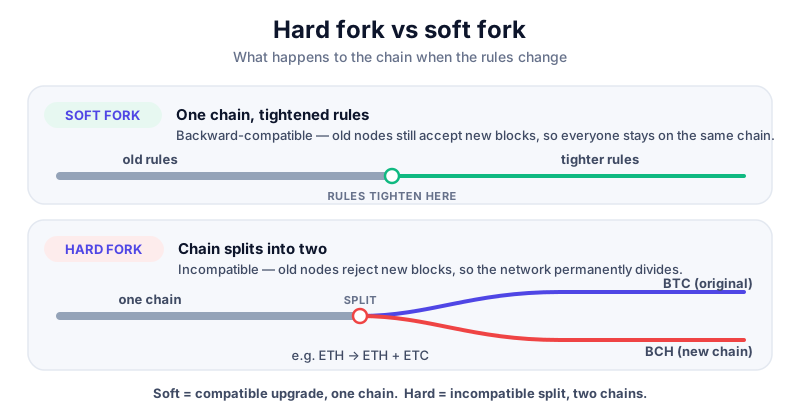
The key distinction is whether the change is backwards-compatible.
| Aspect | Soft fork | Hard fork |
|---|---|---|
| Compatibility | Backwards-compatible | Not backwards-compatible |
| Effect | Tightens existing rules | Changes rules so old and new diverge |
| Chain split | No, if widely adopted | Possible — can create two chains |
| New coin? | No | Sometimes, if the chain splits |
A soft fork tightens the rules in a way old software still accepts, so the network stays unified. A hard fork changes the rules more fundamentally — if part of the community keeps running the old rules, the chain can split into two separate networks, each with its own coin.
Why forks happen
Forks aren't accidents — they're deliberate, even if the outcome is contested. Common reasons include:
- Upgrades to add features or improve performance and security.
- Disagreements over a network's direction, where neither side will back down.
- Emergency fixes to respond to a bug or an attack.
- New projects that copy an existing chain's code and history to launch their own — PulseChain began as a fork of Ethereum, for example.
What a fork means for you
If you hold a coin when a hard fork splits the chain, you may end up with coins on both chains. That can sound like 'free money', but it comes with real catches and risks. Whichever way you lean, the storage rule doesn't change: serious amounts belong offline, on a hardware wallet like the Ledger Nano X.
Forks are a magnet for scams
After a fork, fake 'claim your forked coins' sites appear fast. They try to get you to enter your seed phrase or connect to a malicious site to 'split' your coins — and then drain your wallet. No legitimate process ever needs your seed phrase. This is education, not financial advice.
- Replay risk — without protection, a transaction on one chain can be replayed on the other. Wait for official guidance.
- Worthless or thin new coins — a forked coin may have little value or liquidity.
- Tax implications — receiving forked coins can be taxable; see crypto taxes UK or crypto taxes US.
Where to go next
To understand the bigger picture, read how blockchain works for the rules a fork changes, what is an airdrop for how new tokens get distributed, and how to avoid crypto scams to stay safe around forks.
Key takeaways
- A fork is a change to a blockchain's rules — routine or contentious.
- Soft forks are backwards-compatible; hard forks can split the chain in two.
- Forks happen for upgrades, disagreements, emergency fixes or new projects.
- A chain split can hand you new coins, but scams and replay risk make caution essential.
Frequently asked questions
Does a fork mean I get free coins?
Sometimes a hard fork that splits the chain gives holders coins on both sides. But those coins may be worth little, and the process attracts scams, so 'free' rarely tells the whole story.
What's the difference between a hard and soft fork?
A soft fork is backwards-compatible and keeps the network unified. A hard fork changes the rules in a way that isn't backwards-compatible, and can split the chain into two separate networks.
Are forks dangerous for my crypto?
The fork itself isn't, but the aftermath can be. Watch out for fake 'claim' sites, never enter your seed phrase, and be aware of replay risk until the official software adds protection.
Keep reading
How Blockchain Works (Without the Jargon)
A plain-English explanation of what a blockchain actually is, how blocks are linked and confirmed, what makes
What Is an Airdrop? Free Tokens and the Scams Behind Them
What crypto airdrops are, why projects give tokens away, how to think about them sensibly, and how to spot the
What Is PulseChain? A Plain-English Guide
A balanced, beginner-friendly explanation of PulseChain: what it is, who founded it, how it relates to Ethereu