What Is the Lightning Network? Bitcoin's Fast-Payments Layer
Bitcoin's base layer is secure but slow — it processes only a handful of transactions per second, and fees rise when the network is busy. The Lightning Network is a 'layer 2' built on top of Bitcoin to make small payments fast and cheap. This guide explains how it works, where it shines, and the trade-offs to understand before using it.
The 20-second version
The Lightning Network lets people send Bitcoin almost instantly with tiny fees by routing payments through private channels, settling on the main blockchain only when needed. It's great for everyday spending, but funds in channels live in hot wallets — so it's for spending money, not long-term savings.
Why Lightning exists
The Bitcoin base layer confirms a new block roughly every ten minutes and can only fit so many transactions in each one. That makes it excellent for settling large, important transfers securely — but clumsy for buying a coffee, where you don't want to wait or pay a fee that dwarfs the purchase.
The Lightning Network solves this by moving most payments off-chain. Instead of recording every coffee on the blockchain, two parties keep a running tally between themselves and only settle the final balance on Bitcoin's main chain when they're done.
How payment channels work
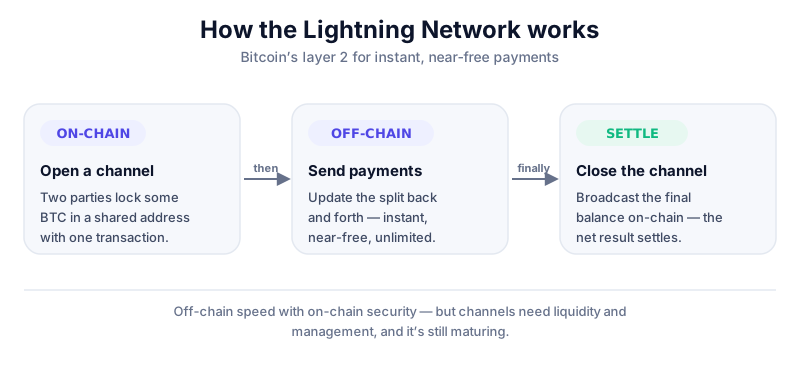
The building block of Lightning is a payment channel — a two-party arrangement locked open by a single on-chain Bitcoin transaction.
- Opening a channel puts some Bitcoin into a shared address that both parties control together.
- Sending payments updates the agreed split between them — instantly, off-chain, and as many times as they like.
- Closing a channel broadcasts the final balance to the Bitcoin blockchain, where it settles like any normal transaction.
You don't need a direct channel with everyone you pay. Lightning routes payments across a web of connected channels, so a payment can hop through several nodes to reach its destination — a bit like how the internet routes data.
What it's good for
Lightning excels at small, frequent payments: tipping, micro-purchases, point-of-sale spending, and sending money between people in seconds. Several countries and apps use it for low-cost remittances.
Custodial vs self-custodial Lightning
Some Lightning wallets are custodial — a company holds your funds and runs the channels for you (easy, but 'not your keys'). Others are self-custodial and put you in control. For more on this trade-off, see hot vs cold wallets.
Trade-offs and limits
- It's hot money. Funds in a channel sit in an internet-connected wallet, so Lightning is for spending, not for storing serious savings.
- Liquidity matters. A channel can only send as much as it holds on your side, and routing can fail if the network lacks capacity along the path.
- Channels need management. Self-custodial users have to keep nodes online and back up channel state carefully.
A fair warning
Lightning is convenient but newer and more complex than on-chain Bitcoin. Keep only modest, spendable amounts in Lightning wallets, and move long-term holdings to cold storage. This guide is education, not financial advice.
Where to go next
If Lightning is new to you, it helps to be solid on the basics first: what Bitcoin is, how Bitcoin mining secures the base layer, and how to store Bitcoin safely. Whichever way you lean, the storage rule doesn't change: serious amounts belong offline, on a hardware wallet like the Ledger Nano X.
Key takeaways
- Lightning is a layer-2 network that makes Bitcoin payments instant and cheap.
- It works through payment channels that settle on-chain only when opened or closed.
- It's ideal for small, everyday spending — not for storing large savings.
- Custodial Lightning wallets are easy but mean someone else holds your keys.
Frequently asked questions
Is the Lightning Network a different coin?
No. It's a payment layer built on top of Bitcoin and uses real bitcoin (BTC). There's no separate Lightning coin to buy.
Are Lightning payments safe?
The technology is sound, but funds live in hot wallets and channel management adds complexity. Treat Lightning balances as spending money and keep savings in cold storage.
Do I need to run a node to use Lightning?
Not necessarily. Many wallets handle the technical side for you, including custodial options. Running your own node gives more control but takes more effort.
Keep reading
What Is Bitcoin? A Plain-English Guide
A beginner-friendly explanation of what Bitcoin is, how it works, and how to think about it — with no hype and
What Is Bitcoin Mining? How New Coins Are Made
A clear guide to Bitcoin mining: how proof-of-work secures the network, what miners actually do, the halving,
What Is a Bitcoin Full Node? Verifying Bitcoin Yourself
A clear guide to Bitcoin full nodes: what they do, why 'don't trust, verify' matters, how nodes differ from mi