Crypto in Japan: Regulation, Exchanges and Tax
Japan was one of the first countries to give cryptocurrency a clear legal footing, and it remains one of the most tightly regulated markets in the world. This guide explains how exchanges are licensed, why two famous hacks shaped the rules, and how crypto is taxed. It's general education, not financial or tax advice.
The 20-second version
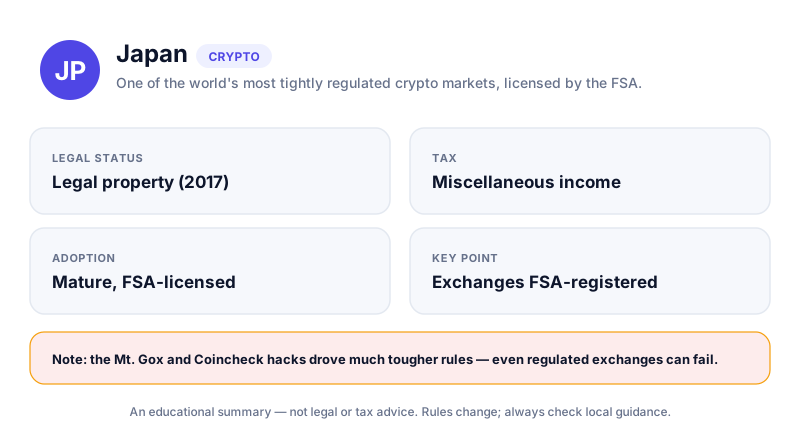
Japan recognised crypto as legal property in 2017 and licenses exchanges through the Financial Services Agency (FSA). Strict consumer-protection rules followed major hacks. Crypto gains are generally taxed as miscellaneous income — often at higher rates than stocks.
Japan's early legal recognition
Japan moved early. In 2017 a revised Payment Services Act recognised crypto assets as a legal form of property and required exchanges to register with the Financial Services Agency (FSA). That gave Bitcoin and other assets a clearer status than in many countries, alongside firm rules for the platforms that handle them.
Today crypto exchanges in Japan must be FSA-registered, segregate customer assets, and meet anti-money-laundering and consumer-protection standards. The result is a market that prioritises safety and compliance over a free-for-all.
How two hacks shaped the rules
Japan's strict approach didn't appear in a vacuum. Two of the most infamous exchange failures in crypto history happened there, and each pushed regulators to tighten the screws.
- Mt. Gox (2014) — once the world's largest Bitcoin exchange, it collapsed after losing hundreds of thousands of bitcoin, a saga that dragged on for years.
- Coincheck (2018) — hackers stole roughly $530 million in NEM tokens, prompting tougher FSA oversight and security requirements.
The lesson for everyone
Even regulated exchanges can be hacked. For anything you'd be upset to lose, self-custody beats leaving funds on a platform. Learn how to store crypto safely.
How crypto is taxed
In Japan, profits from crypto are generally treated as 'miscellaneous income' rather than capital gains. That can mean progressive income-tax rates that climb higher than the flat rate applied to listed stocks, depending on your total income. Rules and thresholds change, and your situation is personal.
Tax is personal — get advice
This is a general overview, not tax advice. Crypto tax rules in Japan are detailed and can change. Speak to a qualified Japanese tax professional about your own circumstances.
Using crypto in Japan today
Japan has a mature ecosystem of licensed exchanges and a population comfortable with digital payments. Many global platforms operate locally only after meeting FSA requirements, which is why the list of available coins can be narrower than in lighter-touch markets.
If you're starting out, the fundamentals matter most: understand how to buy Bitcoin, the difference between hot and cold wallets, and what a seed phrase is before moving serious money. If you need to work out what you owe locally, Koinly imports your history and supports the tax rules of dozens of countries.
Key takeaways
- Japan recognised crypto as legal property in 2017 and licenses exchanges via the FSA.
- The Mt. Gox and Coincheck hacks drove much tougher rules.
- Crypto gains are generally taxed as miscellaneous income, sometimes at high rates.
- Even regulated exchanges can fail — self-custody protects larger holdings.
Frequently asked questions
Is crypto legal in Japan?
Yes. Japan recognised crypto assets as legal property in 2017 and regulates exchanges through the Financial Services Agency. It's one of the most clearly regulated markets in the world.
How is crypto taxed in Japan?
Crypto profits are generally treated as miscellaneous income, which can attract higher progressive rates than listed stocks. This varies by individual, so consult a qualified Japanese tax adviser.
Are exchanges in Japan safe after past hacks?
FSA rules now require asset segregation and stronger security, but no exchange is risk-free. For larger amounts, move funds to your own wallet — see how to store Bitcoin safely.
Keep reading
Crypto in South Korea: Rules, Exchanges and the 'Kimchi Premium'
How cryptocurrency works in South Korea — real-name trading rules, the big domestic exchanges, the famous 'kim
Crypto in the UAE: Dubai, VARA and a Pro-Crypto Hub
How cryptocurrency works in the United Arab Emirates — Dubai's VARA regulator, free zones, the tax picture, an
How to Store Bitcoin Safely (Step by Step)
Keep your Bitcoin safe from hackers and mistakes: hot vs cold wallets, hardware wallets, seed-phrase backups,