Crypto in the UAE: Dubai, VARA and a Pro-Crypto Hub
The United Arab Emirates — and Dubai in particular — has positioned itself as one of the world's most welcoming places for crypto businesses. This guide explains the regulators, the free zones, the tax picture, and what makes the UAE a magnet for the industry. It's general education, not financial, tax or legal advice.
The 20-second version
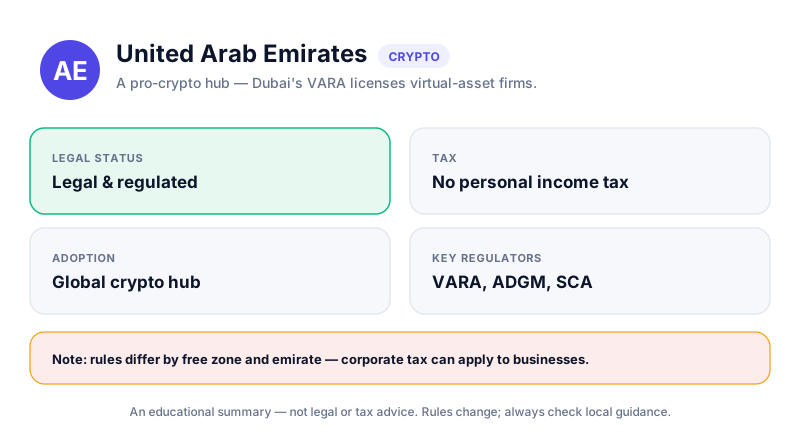
The UAE actively courts crypto firms. Dubai created a dedicated regulator, VARA, to license virtual-asset businesses, with other regulators in Abu Dhabi and at federal level. There's no personal income tax on individuals, though a corporate tax now applies to businesses.
Why the UAE became a crypto hub
Rather than treating crypto with suspicion, the UAE has built infrastructure to attract it. Clear licensing pathways, a business-friendly environment and a deliberate strategy to be a digital-asset centre have drawn exchanges, funds and builders to set up locally — handling everything from Bitcoin to DeFi projects.
- Dedicated regulators give firms a clear path to a licence.
- Free zones offer tailored frameworks for crypto and fintech businesses.
- A pro-innovation stance has made the UAE a relocation destination for crypto companies.
Who regulates crypto in the UAE
The UAE has a layered system rather than a single rulebook. The standout is VARA — Dubai's Virtual Assets Regulatory Authority — created in 2022 specifically to license and supervise virtual-asset service providers in the emirate.
- VARA — Dubai's dedicated virtual-asset regulator.
- ADGM (FSRA) — Abu Dhabi Global Market's framework for digital assets.
- SCA — the federal Securities and Commodities Authority operating at national level.
Different zones, different rules
Which framework applies depends on where a business is based. If you're using a platform, check it actually holds the relevant UAE licence before trusting it with funds.
The tax picture
A big part of the UAE's appeal is tax. There is no personal income tax on individuals, so individual crypto gains generally aren't taxed as personal income. However, the UAE introduced a federal corporate tax in 2023 that can apply to businesses, and VAT rules can apply to certain activities.
Don't assume 'tax-free'
The personal-tax position is attractive, but business activity, residency and your home country's rules can all change the picture. This is a general overview, not tax advice — consult a qualified professional.
Using crypto in the UAE
Residents have access to a growing set of licensed exchanges and services. As anywhere, choosing a properly regulated platform and practising good self-custody matters more than chasing the newest token.
Volatility and risk
A friendly regulatory climate doesn't make crypto safe to gamble with. Prices are volatile and you can lose money — only risk what you can afford to lose, and learn to spot scams. Education, not advice.
Key takeaways
- The UAE actively positions itself as a global crypto hub.
- Dubai's VARA licenses virtual-asset firms, alongside ADGM and the federal SCA.
- Individuals pay no personal income tax, but corporate tax applies to businesses.
- Pick licensed platforms and practise good self-custody — the climate is friendly, not risk-free.
Frequently asked questions
Is crypto legal in the UAE?
Yes, and the UAE actively regulates it. Dubai's VARA licenses virtual-asset businesses, with separate frameworks in Abu Dhabi (ADGM) and at federal level (SCA).
Do individuals pay tax on crypto in the UAE?
The UAE has no personal income tax, so individual crypto gains generally aren't taxed as personal income. A corporate tax applies to businesses, and your home-country rules may still apply. Consult a professional.
What is VARA?
The Virtual Assets Regulatory Authority, created by Dubai in 2022 to license and supervise crypto and virtual-asset service providers operating in the emirate.
Keep reading
Crypto in Japan: Regulation, Exchanges and Tax
How cryptocurrency works in Japan — one of the world's most regulated markets. Licensing under the FSA, the le
Crypto in South Korea: Rules, Exchanges and the 'Kimchi Premium'
How cryptocurrency works in South Korea — real-name trading rules, the big domestic exchanges, the famous 'kim
What Is DeFi? Decentralised Finance Explained
A beginner's guide to decentralised finance: what DeFi is, how lending, trading and yield work without a bank