Honeypot Tokens Explained
A honeypot token is a cryptocurrency engineered so that you can buy it but can't sell it. The price chart often looks like a rocket, drawing buyers in — but the smart contract quietly blocks everyone except the creator from cashing out. This guide explains how honeypots are built and how to check a token before you ever click buy.
The 20-second version
Honeypots are tokens whose code prevents ordinary holders from selling. The rising price is bait. Before buying any obscure token, check it with a reputable honeypot/contract scanner, verify liquidity is locked, and remember most new tokens fail regardless. This is education, not financial advice.
What a honeypot token is
On most blockchains, anyone can create a token in minutes and write its rules into a smart contract. A honeypot is a token whose contract contains hidden logic that lets buys go through but causes sells to fail — through transfer restrictions, sky-high sell taxes, blacklists, or functions only the owner can flip.
The result is a one-way door. Victims see the price climbing and pile in, but when they try to take profit, the transaction reverts. The creator, who is exempt from the rules, eventually drains the pooled money and disappears — a form of rug pull.
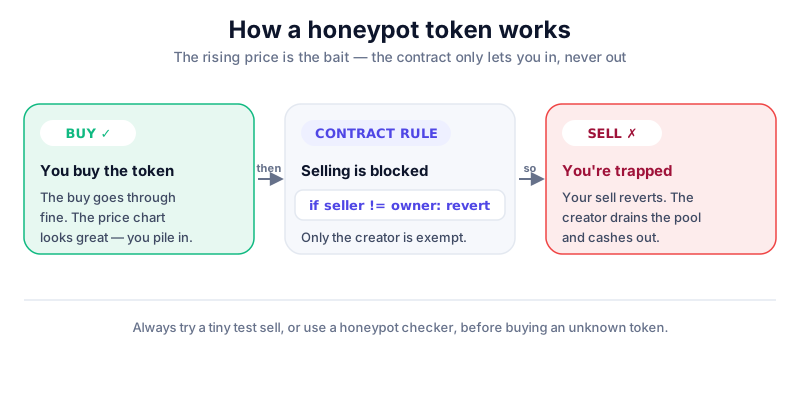
Common honeypot tactics
- Sell blocks — code that simply reverts any sell from a normal wallet.
- Extreme sell tax — a tax of 90%+ on selling, so cashing out is pointless.
- Blacklisting — the owner can flip a switch to stop specific wallets selling.
- Fake hype — bot-driven social buzz and a pumping chart to manufacture FOMO.
- Hidden mint/owner powers — functions that let the creator change rules or print tokens at any time.
A rising chart proves nothing
Honeypots are designed to look like winners. Price going up is the bait, not a green light. Never let a chart pressure you into a fast decision. Only ever risk money you can afford to lose, and never borrow to buy.
How to check a token before buying
- Run the contract address through a reputable honeypot scanner or token-safety checker to see if selling is blocked or heavily taxed.
- Confirm the contract is verified and look for unusual owner powers like blacklists, pausing, or unlimited minting.
- Check that liquidity is locked or burned, and look at how concentrated the holdings are — a few wallets owning most of the supply is a red flag.
- Be sceptical of anonymous teams, copied websites, and aggressive influencer or DM promotion.
- When unsure, walk away. There's no obligation to buy, and most brand-new tokens go to zero even when they aren't outright scams.
Scanners help but aren't foolproof
Some honeypots are coded to pass automated checks or to turn malicious only after enough money is in. Treat scanner results as one signal, not a guarantee of safety.
The bigger picture
Honeypots thrive in the world of brand-new, low-information tokens where excitement outruns due diligence. The same caution applies to meme coins and unaudited DeFi projects generally. Slowing down, verifying the contract, and accepting that you might miss an opportunity are what keep you out of these traps. If you're ever tempted to rush, that's exactly the moment to stop.
Key takeaways
- Honeypot tokens let you buy but block you from selling.
- A rising price is the bait, not proof the token is safe.
- Scan the contract, check liquidity locks, and watch owner powers and holder concentration.
- Scanners aren't perfect; when in doubt, don't buy — only risk what you can afford to lose.
Frequently asked questions
How do I know if a token is a honeypot before buying?
Run its contract address through a reputable honeypot or token-safety scanner, check that liquidity is locked, and review the contract for sell restrictions and owner privileges. No check is 100% reliable, so caution comes first.
I'm stuck holding a honeypot — can I get my money out?
Usually not. By design these contracts block ordinary holders from selling, and on-chain transactions can't be reversed. Anyone promising to 'unlock' your tokens for a fee is running another scam.
Are all new tokens honeypots?
No, but new and obscure tokens carry the highest risk of being honeypots or other rug pulls. The vast majority of new tokens also lose value for ordinary reasons, so treat them as highly speculative.
Keep reading
Ponzi and HYIP Schemes in Crypto
Ponzi schemes and high-yield investment programs promise guaranteed returns and pay old investors with new mon
Fake Airdrop Scams Explained
Fake airdrops dangle free tokens to lure you onto a malicious site. Learn how the bait works and how to claim
How to Avoid Crypto Scams: The Cornerstone Safety Guide
The common crypto scams — fake support, phishing, giveaways, romance and rug pulls — and the simple habits tha