Proof of Work vs Proof of Stake
Proof of work and proof of stake are the two dominant ways blockchains agree on who gets to add the next block. They aim for the same goal — keeping the network secure without a central authority — but get there very differently. Here's how they compare, without the tribalism.
The 20-second version
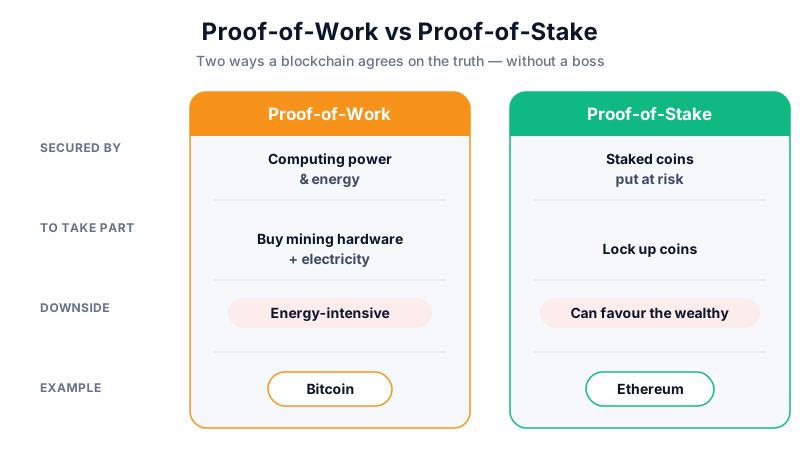
Both are consensus mechanisms. Proof of work secures the chain by making participants burn electricity (mining). Proof of stake secures it by making participants lock up coins they'd lose if they cheat (staking). Bitcoin uses the first; Ethereum and most newer chains use the second.
How proof of work works
In proof of work, computers (miners) race to solve a hard mathematical puzzle. The winner adds the next block and earns a reward. Solving the puzzle requires enormous computing power, so attacking the network would mean out-spending everyone else on hardware and electricity — wildly expensive.
That cost is the security. Bitcoin has run on proof of work since 2009 and is the most battle-tested example. The downside is the energy: all that computing burns real electricity, day and night.
How proof of stake works
Proof of stake replaces electricity with a deposit. Participants (validators) lock up — or 'stake' — the network's coins. The protocol picks validators to propose and check blocks, and if a validator tries to cheat, part of their stake is destroyed (a penalty called 'slashing').
Ethereum switched from proof of work to proof of stake in 2022, cutting its energy use by more than 99%. Most newer chains, including Solana, use a form of proof of stake. And however you weigh the trade-offs, keep meaningful holdings in cold storage — a SafePal S1 — rather than on an exchange.
The trade-offs side by side
- Energy — proof of work uses a lot; proof of stake uses very little.
- Security model — proof of work is secured by physical cost (hardware + power); proof of stake by financial cost (locked, slashable coins).
- Track record — proof of work is older and more tested; proof of stake is newer but now secures huge networks.
- Barrier to entry — proof-of-work mining needs specialist gear; proof-of-stake staking needs capital.
Neither is simply 'better'
Each model has genuine strengths and real critics. Proof of stake is praised for efficiency but criticised for potentially favouring large holders; proof of work is praised for robustness but criticised for energy use. This is education, not financial advice — don't treat a chain's consensus method as a reason to buy.
Key takeaways
- Both secure a blockchain without a central authority — they just use different costs.
- Proof of work burns electricity; proof of stake locks up coins that can be slashed.
- Proof of work is older and more tested; proof of stake is far more energy-efficient.
- Neither is universally 'better' — each has real trade-offs and fair criticism.
Frequently asked questions
Which is more secure, proof of work or proof of stake?
They secure networks differently, so there's no simple winner. Proof of work has the longest track record; proof of stake now secures very large networks with far less energy. Both have respected supporters and critics.
Why did Ethereum switch to proof of stake?
Mainly to cut energy use — the 2022 switch reduced it by over 99% — and to change how the network scales and rewards participants.
Keep reading
What Is Blockchain Consensus?
How thousands of strangers' computers agree on a single shared ledger without a boss. A plain-English guide to
What Is Crypto Mining? A Beginner's Guide
What crypto mining actually is, how it secures networks like Bitcoin, why it uses so much energy, and whether
What Is Staking? How It Works and What It Costs
A plain-English guide to crypto staking: how it secures proof-of-stake networks, how rewards work, and the loc