What Is an NFT Marketplace? A Beginner's Guide
An NFT marketplace is where people buy, sell and browse non-fungible tokens — the digital collectibles, art and assets that live on a blockchain. This guide explains what these marketplaces are, how a trade actually works, what they charge, and the pitfalls every newcomer should understand before connecting a wallet.
The 20-second version
An NFT marketplace is like an online store and auction house for blockchain-based items. You connect a self-custody wallet, browse listings, and trade directly with other people. The platform takes a fee, but never holds your keys — so security is on you.
What an NFT marketplace actually is
An NFT is a unique token recorded on a blockchain that points to a specific item — a piece of art, a collectible, a game asset, or a membership pass. A marketplace is simply the website where these tokens are listed, priced and traded. Think of it as eBay or an auction house, but the items are blockchain tokens and the platform never takes custody of your money.
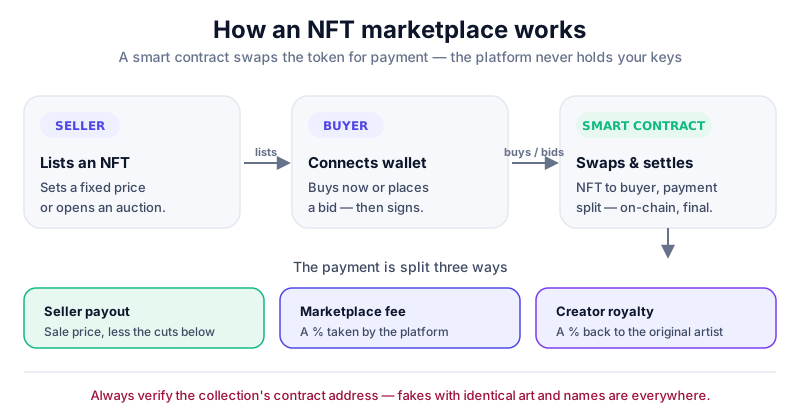
Crucially, most marketplaces are non-custodial. You connect your own wallet, the trade settles on-chain, and the platform only facilitates the match. That's a big difference from a traditional shop — there's no customer-service team that can reverse a transaction once it's confirmed.
How buying and selling works
Whether you're buying or listing, the flow is broadly the same: connect a wallet, approve the marketplace to interact with your tokens, and confirm the transaction. Every action that changes the blockchain costs a network 'gas' fee on top of any platform fee.
- Fixed price — the seller sets a 'buy now' price and anyone can purchase instantly.
- Auction — buyers place bids over a set period; the highest wins.
- Offers — a buyer proposes a price below the listing and the seller can accept or decline.
Because trades settle through smart contracts, you control everything from your wallet. New to wallets? Start with our guide to hot vs cold wallets so you understand what you're connecting.
Most marketplaces connect through a browser wallet like MetaMask. It's free and self-custody — but that means you alone are responsible for your keys. Learn the basics before you connect.
The main marketplaces
Different chains have different leading venues, and the landscape shifts quickly. As a snapshot, OpenSea and Blur have been among the largest Ethereum marketplaces, Magic Eden has been prominent on Solana, and several exchanges run their own NFT storefronts. Always verify you're on the official site — fake marketplace clones are a common scam.
- Generalist marketplaces list everything from art to gaming items across many collections.
- Curated platforms focus on vetted artists and one-of-one art, often with higher quality control.
- Chain-specific marketplaces specialise in a single blockchain's ecosystem.
Fees, royalties and risks
Marketplaces typically charge a percentage fee on each sale. Many collections also include creator royalties, so a share of every resale goes back to the original artist. On top of that, you pay network gas fees, which can spike when a chain is busy.
NFT values are highly speculative
NFT prices are extremely volatile and many have fallen to near zero. Buy because you value the item, not as an investment. Only ever risk what you can afford to lose, and never borrow to buy. This is education, not financial advice.
Watch what you're signing
Connecting a wallet means approving smart-contract permissions. Malicious listings can request approvals that drain your wallet. Read every signature request, and learn the warning signs in our NFT scams guide.
Where to go next
If you'd like to create rather than just buy, read how to mint an NFT. To stay safe, our NFT scams explained walkthrough covers the most common traps. And to see why people care beyond pictures, look at real-world NFT use cases.
Key takeaways
- An NFT marketplace is an online store and auction house for blockchain tokens.
- Most are non-custodial — you connect your own wallet and trades settle on-chain.
- You pay platform fees, creator royalties and network gas on top of the price.
- NFT prices are highly speculative — buy for the item, not as an investment.
Frequently asked questions
Do I need cryptocurrency to use an NFT marketplace?
Usually yes. Most marketplaces price items in a cryptocurrency such as ETH or SOL, and you'll need some of that coin (plus extra for gas fees) in a connected wallet.
Can I get my money back if a trade goes wrong?
Almost never. Blockchain transactions are final and there's no central authority to reverse them. That's why verifying the site and reading every signature request matters so much.
Is it safe to connect my wallet to a marketplace?
Reputable, well-known marketplaces are generally safe, but the risk is the permissions you approve. Connect only on official sites, and consider using a separate wallet with limited funds for browsing.
Keep reading
How to Mint an NFT (Step by Step)
A beginner's step-by-step guide to minting an NFT: choosing a chain, setting up a wallet, uploading your work,
What Are NFT Royalties? How Creator Resale Fees Work
A clear guide to NFT royalties: how creators earn from resales, why they're not always enforced, and what buye
NFT Scams Explained: How to Spot and Avoid Them
The most common NFT scams — fake mints, wallet-draining approvals, phishing, rug pulls and counterfeits — and