What Is INC (Incentive)? PulseX's Reward Token, Explained
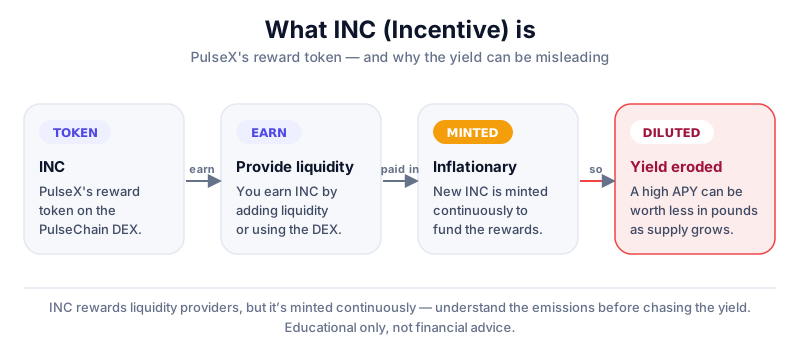
INC — short for 'Incentive' — is a token on PulseChain that PulseX mints to reward people who provide liquidity. It's a textbook example of a 'farm token' or 'incentive token', a category found across DeFi, and understanding how these work protects you from a very common misunderstanding: that the eye-catching yields attached to them are free money. They aren't, and this guide explains why — plainly, and without hype.
The 20-second version
INC is an extra reward paid to PulseX liquidity providers on top of trading fees. It's created (minted) continuously to fund those rewards, which makes it inflationary by design — new INC keeps entering circulation. That's fine if demand keeps pace and a problem if it doesn't. It carries all the usual DeFi risks plus the PulseChain ecosystem's specific controversies. Not financial advice.
What an 'incentive token' actually is
A decentralised exchange only works if people deposit tokens into its liquidity pools — without liquidity, there's nothing to trade against. But providing liquidity carries real risks (including impermanent loss), so DEXs need to make it worth people's while. Trading fees are one reward. Many DEXs add a second: they mint a brand-new token and hand it to liquidity providers as a bonus. On PulseX, that token is INC. This is the same mechanism behind countless 'farm tokens' across DeFi — the reward you 'harvest' for putting your capital to work.
Why it's inflationary — and why that matters
Here's the part the marketing rarely dwells on. Because INC is continuously created to pay rewards, its supply grows over time. New tokens entering circulation is, by definition, inflation. Many of the people earning INC are 'farmers' who harvest and sell it to realise their yield — which creates a steady stream of sell pressure. For the price to hold up, new buying demand has to at least match the new supply and the farmers cashing out. When it does, all is well; when enthusiasm cools, incentive tokens can fall hard and fast, because the selling is structural and the buying is optional.
'High APY' is a headline, not a promise
A yield quoted in INC is only worth what INC is worth *when you sell it* — which may be far less than when you earned it, thanks to that built-in inflation. A triple-digit APY paid in an inflating token can still lose you money in pounds. Always separate the yield rate from the value of the thing you're being paid in.
The risks, stated plainly
- Inflation and sell pressure. Continuous minting plus farmers harvesting means the token needs constant fresh demand just to hold its value.
- Impermanent loss. To earn INC you provide liquidity, which can leave you worse off than simply holding the two tokens — the full explanation here.
- Smart-contract risk. Farming means trusting the pool and reward contracts; bugs and exploits are a real category of loss.
- Ecosystem risk. INC is part of PulseChain, so the regulatory and concentration concerns around the wider project apply.
- Impostor risk. As with any token, verify INC by its contract address, never by name — fakes are trivial to create.
How to think about it
None of this makes INC a scam — incentive tokens are a legitimate, widely-used DeFi mechanism, and PulseX's is one instance of a well-understood design. It does mean you should treat 'earning INC' as an advanced, high-risk activity, not a passive yield, and understand that the returns depend heavily on a token whose supply is engineered to grow. If you don't yet know what impermanent loss is or how to verify a contract address, you're not ready to farm — and there's no shame in that. Learn the foundations first; the PulseChain course is a sensible place to start.
And the rule that outranks all the others: your keys, your coins. Whatever you farm, do it from a wallet you control, keep your core holdings in cold storage, and never treat a yield dashboard's number as money in the bank.
Key takeaways
- INC is PulseX's incentive token — an extra reward minted to liquidity providers
- It's inflationary by design: new INC is continuously created to fund rewards
- Farmers harvesting and selling create structural sell pressure that demand must offset
- A high APY paid in an inflating token can still lose money measured in pounds
- Farming INC is advanced and high-risk — understand impermanent loss and contract checks first
Frequently asked questions
How do you earn INC?
By providing liquidity on PulseX and, typically, staking the resulting liquidity-provider tokens in the relevant reward pool. The exact steps and pools change over time — follow PulseX's own documentation, and understand impermanent loss before you start.
Is INC the same as PLSX?
No. PLSX is PulseX's main token, tied to its buy-and-burn model. INC is a separate token minted specifically to reward liquidity providers. Different tokens, different roles — PulseX explained here.
Is a high INC yield safe to chase?
Treat it with caution. The yield is paid in a token whose supply is designed to grow, so its pounds-and-pence value can fall even as the headline APY looks huge. Yield farming is an advanced activity with several stacked risks — never money you can't afford to lose.
Keep reading
What Is PulseX? The Main DEX on PulseChain, Explained
PulseX is the flagship decentralised exchange on PulseChain, with its own PLSX token and a built-in buy-and-bu
What Is PulseChain? A Plain-English Guide
A balanced, beginner-friendly explanation of PulseChain: what it is, who founded it, how it relates to Ethereu
PulseChain: Risks and Controversy (The Honest Picture)
A factual, balanced look at PulseChain's risks: the SEC complaint against Richard Heart, concentration concern