What Is Injective (INJ)? A Plain-English Guide
Injective is a layer-1 blockchain built specifically for finance — trading, derivatives and other money-market apps. This guide explains what Injective is in plain English, how it works, and how to think about it sensibly, without hype or price calls.
The 20-second version
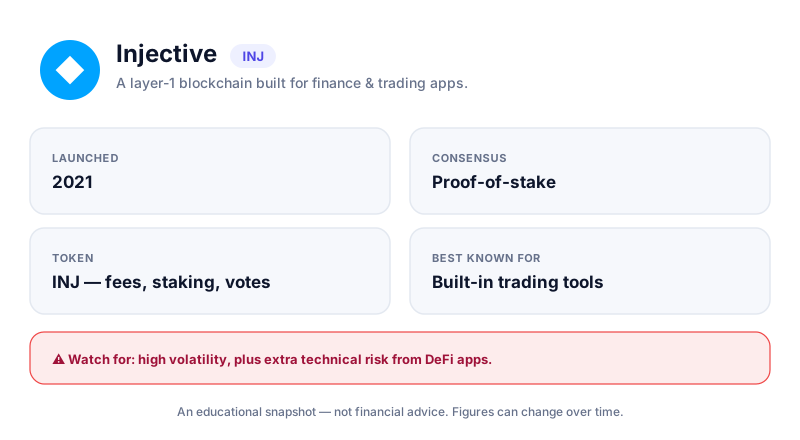
Injective is a fast, low-cost blockchain designed for financial apps. It offers ready-made trading tools developers can build on, connects to chains like Ethereum and Solana, and uses the INJ token for fees, staking and governance.
What is Injective?
Most blockchains are general-purpose: you can build almost anything on them, but you build the financial plumbing yourself. Injective takes a different angle — it's a layer-1 aimed squarely at DeFi, with trading infrastructure built into the chain itself so developers don't have to start from scratch.
Launched in 2021, Injective was built using the Cosmos toolkit, which is designed to let independent blockchains talk to one another. Its token is INJ.
How Injective works
Injective uses a Proof of Stake system, where holders lock up INJ to help secure the network and earn rewards. It's designed for speed and very low fees — important for trading apps where many small transactions add up.
- Built-in order book lets exchanges launch without rebuilding core trading tools.
- Interoperability connects it to chains like Ethereum and Solana, so assets can move across.
- INJ staking secures the network; stakers can earn rewards (and can lose stake for bad behaviour).
- Governance lets INJ holders vote on changes to the network.
A 'finance-first' chain
Injective's selling point is that the hard financial machinery — order books, derivatives support, cross-chain links — comes built in, so app builders can focus on their product.
What it's used for
The natural use cases are decentralised exchanges, derivatives platforms, prediction markets and other trading apps. Because INJ is staked to secure the chain — see our guide to staking — and used to pay fees and vote, demand is tied to how much the network is actually used.
Why it matters — and the trade-offs
Specialising in finance lets Injective offer features and speed that general-purpose chains have to bolt on. Supporters point to low fees, fast settlement and a token model where network activity can reduce the supply of INJ over time.
The honest counterpoint: it competes with much larger ecosystems for users and liquidity, DeFi carries real risks including bugs and exploits, and a specialised chain rises or falls with that single sector. None of this predicts where INJ's price will go. And however you weigh the trade-offs, keep meaningful holdings in cold storage — a Keystone 3 Pro — rather than on an exchange.
A fair warning
INJ is highly volatile, like all crypto, and DeFi adds extra technical risk. Only ever risk what you can afford to lose, and never borrow to buy. This guide is education, not financial advice — and we don't make price predictions.
Where to go next
To understand the apps Injective hosts, read what is DeFi, what is a DEX, and what is staking. New to crypto? Start with how to buy Bitcoin, how to store it safely, and how to avoid scams.
Key takeaways
- Injective is a layer-1 blockchain purpose-built for finance and trading.
- It offers built-in trading tools and connects to chains like Ethereum and Solana.
- INJ is used for fees, staking to secure the network, and governance.
- It's volatile and DeFi adds risk — only risk what you can afford to lose.
Frequently asked questions
What is INJ used for?
INJ pays transaction fees, is staked to help secure the network and earn rewards, and is used to vote on governance decisions about how the chain evolves.
How is Injective different from Ethereum?
Ethereum is general-purpose; Injective is specialised for finance, with trading infrastructure like order books built directly into the chain. It also connects to other networks to move assets across.
Is staking INJ risk-free?
No. Staking earns rewards but ties up your tokens, and validators can be penalised ('slashed') for misbehaviour, which can affect delegators. Token prices can also fall while staked. Read our staking guide first.
Keep reading
What Is VeChain? A Plain-English Guide
A beginner-friendly explanation of VeChain (VET): what the supply-chain blockchain does, how its two-token sys
What Is Filecoin? A Plain-English Guide
A beginner-friendly explanation of Filecoin (FIL): the decentralised storage network, how it pays people to st
What Is the Internet Computer (ICP)? A Plain-English Guide
A beginner-friendly explanation of the Internet Computer (ICP): the blockchain that aims to host full apps on-