What Is zkSync? A Plain-English Guide to the ZK Rollup
zkSync is an Ethereum layer 2 network that uses a different kind of technology to most: zero-knowledge proofs. The goal is the same as other layer 2s — cheaper, faster transactions backed by Ethereum's security — but the method is distinct. This guide explains zkSync in plain English.
The 20-second version
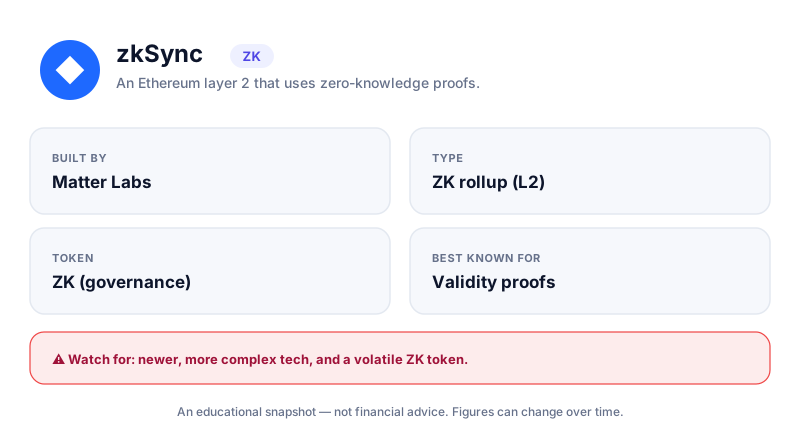
zkSync is a 'ZK rollup'. Instead of assuming batches are honest and allowing challenges, it cryptographically proves each batch is valid before Ethereum accepts it. That can make withdrawals faster. ZK is its token.
What is zkSync?
zkSync is built by Matter Labs and is one of the leading ZK rollups on Ethereum. Like Arbitrum and Optimism, it moves activity off Ethereum to cut fees, then settles back to Ethereum. The difference is in how it proves the off-chain work was done correctly.
How zkSync works
A zero-knowledge rollup generates a cryptographic proof — a 'validity proof' — showing that a batch of transactions followed the rules. Ethereum checks the proof rather than re-running every transaction. If the proof is valid, the batch is accepted; there's no need to wait out a challenge window.
- Validity proofs mathematically guarantee a batch is correct.
- No challenge window, so withdrawals to Ethereum can finalise faster than on optimistic rollups.
- Heavier computation is needed to create those proofs.
For a side-by-side look at the two approaches, see optimistic vs zk rollups.
The ZK token and trade-offs
zkSync introduced a governance token, ZK, used to help steer the network. As with other layer 2s, you generally don't need the token simply to transact. And however you weigh the trade-offs, keep meaningful holdings in cold storage — a Keystone 3 Pro — rather than on an exchange.
A fair warning
ZK rollup technology is newer and more complex, and the token is highly volatile. Only ever risk what you can afford to lose, and never borrow to buy crypto. This guide is education, not financial advice.
Key takeaways
- zkSync is an Ethereum layer 2 using zero-knowledge (validity) proofs.
- It proves batches are valid rather than allowing challenges.
- That can make withdrawals to Ethereum faster than optimistic rollups.
- The tech is newer and more complex; the ZK token is volatile.
Frequently asked questions
What does 'zero-knowledge' mean here?
It refers to cryptographic validity proofs that confirm a batch of transactions is correct without re-running every transaction. The 'zero-knowledge' name comes from the underlying maths, not from any secrecy in your transactions.
Is zkSync safer than Arbitrum or Optimism?
It's a different security model, not strictly safer. Validity proofs avoid the challenge-window wait, but the technology is newer and more complex. All these networks ultimately rely on Ethereum.
Keep reading
Optimistic vs ZK Rollups: What's the Difference?
A plain-English comparison of optimistic and zero-knowledge (ZK) rollups — the two main ways Ethereum layer 2s
What Is Arbitrum? A Plain-English Guide to the Ethereum Layer 2
A beginner-friendly explanation of Arbitrum: what it is, how its optimistic rollup makes Ethereum cheaper and
What Is Optimism? A Plain-English Guide to the OP Mainnet Layer 2
A beginner-friendly explanation of Optimism: what it is, how its optimistic rollup and the OP Stack work, the