Crypto Tax Records: What HMRC Expects You to Keep
If you buy, sell, swap or earn crypto in the UK, HMRC expects you to keep a clear record of every transaction — not just a screenshot of your portfolio. This is a plain-English guide to what those records look like and why they matter. It's general information, not personal tax advice.
The 20-second version
HMRC expects you to keep detailed records of every crypto transaction: the date, what you did, how much, the value in pounds at the time, the fees and the wallet or exchange involved. Exchanges generally won't do this for you, and reconstructing it years later is painful. Keep records for several years and always check HMRC's current guidance or a qualified accountant — the exact retention period and rules can change.
Read this first
This is education, not tax advice
Tax rules, allowances and record-keeping requirements change, and your situation is unique. Nothing here is personal advice. Always check the current official HMRC guidance (the Cryptoassets Manual) or speak to a qualified accountant before you file or decide how long to keep anything.
Why records are your problem, not the exchange's
HMRC generally treats crypto as property rather than money, which means many things you do with it — selling, swapping one coin for another, spending it, sometimes earning it — can be taxable events. To work out what (if anything) you owe, you need an accurate history of everything you did. That history is your legal responsibility as the taxpayer, even if a piece of software or an accountant does the heavy lifting.
It's tempting to assume your exchange keeps perfect records for you. In practice it usually doesn't — at least not in the form HMRC wants. Exchanges track activity on their own platform, but they don't see your hardware wallet, your DeFi positions, or the coins you moved to a competitor. For the bigger picture on the rules these records feed into, see our overview of crypto taxes in the UK.
Where exchange data falls short
- It only covers activity on that one exchange — not transfers in or out, or anything on-chain.
- It may not show the GBP value at the exact time of each transaction, which is what HMRC actually needs.
- Platforms close, get acquired, or restrict access — and old data can vanish or become hard to export.
- Free CSV exports are often incomplete, missing fees, internal transfers or 'dust' amounts.
- It rarely applies the UK's specific pooling and matching rules for you.
What HMRC expects you to record
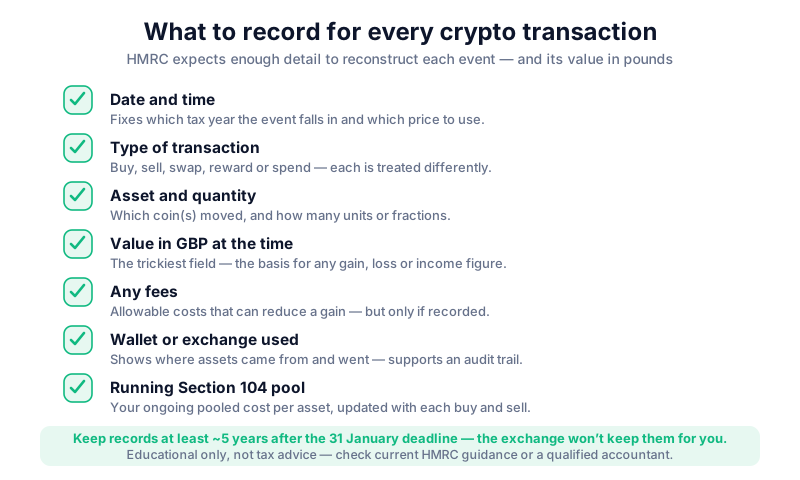
For each transaction, HMRC's guidance points to keeping enough detail to reconstruct exactly what happened and what it was worth in pounds at the time. The table below is a practical checklist of the fields worth capturing. The single trickiest one is the GBP value at the moment of the transaction — that's what your gain or loss is calculated from.
| Field to log | Why HMRC cares about it |
|---|---|
| Date and time | Fixes which tax year the event falls in and which value to use. |
| Type of transaction | Buy, sell, swap, spend, gift, income — each is treated differently. |
| Asset(s) involved | Identifies what was disposed of and what was acquired. |
| Quantity | How many units (and fractions) moved in and out. |
| Value in pounds at the time | The basis for any gain, loss or income figure. |
| Transaction fees | Allowable costs that can reduce a gain — but only if recorded. |
| Wallet addresses / exchange | Shows where assets came from and went; supports an audit trail. |
| Bank statements & exchange records | Corroborate the on-chain and platform data you've logged. |
A swap counts, even with no pounds involved
Trading one token directly for another is usually a disposal of the first token for UK tax purposes — so you still need its GBP value at that moment, even though no money hit your bank. We cover this in detail in do you pay tax swapping crypto in the UK.
Earned crypto needs extra detail
When you earn crypto rather than buy it — through staking, mining, some airdrops, or being paid in tokens — there are usually two figures to capture, not one. First, the GBP value when you received it (often relevant for Income Tax). Second, that same value becomes your acquisition cost for any later disposal (relevant for Capital Gains Tax). Logging both at the time saves a lot of guesswork later.
- Staking and mining rewards — record the date, quantity and GBP value of each reward as you receive it. See what is staking and our note on crypto staking and mining tax in the UK.
- Airdrops — log when they landed and their value at that point; how they're treated can vary. Background in what is an airdrop.
- DeFi and NFTs — these can generate frequent, fiddly events; keep granular records. See what is DeFi and what is an NFT.
How long to keep records — and the cold-wallet trap
HMRC expects you to keep records for a set number of years after the relevant filing deadline, and longer if a return is late or under enquiry. Because the exact period can change, check the current figure on HMRC's site rather than relying on a number you read somewhere. The safe instinct is to keep more, for longer, and to back it up.
A practical wrinkle: if you move coins to cold storage and don't touch them for years, the record of what you paid and when can drift out of reach by the time you eventually sell. Whatever system you use to store Bitcoin safely, keep the acquisition details with it — your future self will need them to calculate a gain.
Reconstructing years later is genuinely painful
Historic prices, dead exchanges, lost CSVs and forgotten wallets all conspire against you. The cheapest moment to record a transaction is the moment it happens. Export and back up your data regularly rather than hoping it's still there at filing time.
Building a record-keeping system that survives
You don't need anything fancy — you need something consistent. A simple, repeatable routine beats a perfect spreadsheet you abandon after a month. The steps below outline an approach that holds up over several tax years.
- List every exchange, wallet and platform you've ever used — including ones you've stopped using.
- Export full transaction history from each as soon as you can, in the most complete format available.
- Capture the GBP value at the time of each transaction, plus fees, rather than only the coin amounts.
- Store everything in at least two places (for example a cloud folder and a local backup).
- Reconcile periodically so gaps and mismatches surface while they're still fixable.
- Keep the records safely for the period HMRC currently specifies — check their site for the exact length.
Doing this by hand across multiple platforms is where most people come unstuck. Tax software is built to automate exactly this: it imports your history, fetches historic GBP prices, tracks fees and reconciles transfers between your own wallets. Once your records are in order, the same data feeds straight into working out your capital gains and, ultimately, filing your Self Assessment.
Koinly connects your exchanges and wallets, fetches historic GBP values and reconciles transfers, applying HMRC pooling plus the Same-Day and 30-day rules automatically. It's free to import and preview your data — you only pay to download the finished SA108-ready report.
Key takeaways
- Keeping accurate records of every crypto transaction is your legal responsibility, not the exchange's.
- For each transaction log the date, type, amounts, GBP value at the time, fees and the wallet or platform involved.
- Earned crypto needs two values: what it was worth when received, and that figure as your future acquisition cost.
- Keep records for the period HMRC currently specifies, back them up, and check the exact length on HMRC's site.
- Tax software automates importing, pricing and reconciling — far easier than rebuilding history years later.
Frequently asked questions
Doesn't my exchange already keep records for HMRC?
Not in the form HMRC needs. Exchanges track activity on their own platform, but they don't see your other wallets, on-chain transfers or DeFi positions, and their exports often miss the GBP value at the time and some fees. The complete record is your responsibility.
Do I need to record a coin-to-coin swap if no pounds were involved?
Generally yes. Swapping one token for another is usually treated as a disposal of the first token, so you still need its GBP value at that moment. No money reaching your bank doesn't make it invisible to HMRC.
How long should I keep my crypto tax records?
HMRC specifies a number of years after the filing deadline, and longer if a return is late or under enquiry. Because the exact period can change, check the current figure on HMRC's site or with a qualified accountant — and lean towards keeping more for longer.
What's the hardest part to get right?
The GBP value at the exact time of each transaction, especially for swaps, earned crypto and activity on platforms that no longer exist. Recording it as transactions happen, or using software that fetches historic prices, avoids painful reconstruction later.
Keep reading
Crypto Taxes in the UK: A Plain-English Overview (HMRC)
How HMRC generally treats crypto for UK taxpayers — capital gains, income, record-keeping and allowances — exp
Koinly Review (2026): The Best Crypto Tax Software for UK Users?
Our Koinly review: the most HMRC-ready crypto tax software we've used, with Same-Day and Bed-and-Breakfasting
Do You Pay Tax When You Swap One Crypto for Another? (UK)
A plain-English UK guide to whether swapping crypto for crypto triggers Capital Gains Tax under HMRC rules, wi