What Is Solana? A Plain-English Guide
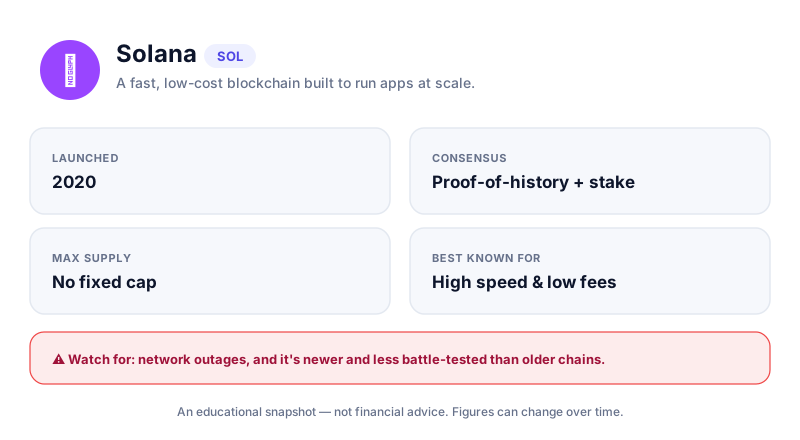
Solana is a fast, low-cost blockchain built to run apps at scale, with its own cryptocurrency called SOL. This is the first stop in our Solana course, and we'll keep it plain and honest: what Solana actually is, how it differs from Bitcoin and Ethereum, what people use it for, and the risks worth knowing before you go any further.
The 20-second version
Solana is a blockchain designed for speed and cheap fees — it can process thousands of transactions per second. Its coin, SOL, pays the fees and helps secure the network through staking. It's powerful but newer and less battle-tested than Bitcoin, and it has suffered network outages. Capable, but not without trade-offs.
What is Solana?
Solana is a public blockchain — a shared, tamper-resistant ledger run by thousands of computers around the world, with no single company in charge. Like Ethereum, it's not just for sending money: it can host full applications such as token swaps, lending apps, marketplaces and games. Think of it less as a digital coin and more as a global computer that anyone can build on. What sets Solana apart from the crowd is its single-minded focus on raw speed and very low fees — almost everything about its design comes back to those two goals.
Its native cryptocurrency is SOL. SOL does two main jobs. First, you use it to pay transaction fees — every action on the network costs a tiny amount of SOL, often a fraction of a penny. Second, you can lock it up, a process called staking, to help secure the network and earn rewards in return. We'll dig into both later in this course, but for now just hold the idea that SOL is both the fuel and part of the network's security deposit.
One fact worth holding on to: Solana launched in 2020. That makes it a teenager compared to Bitcoin (2009) and Ethereum (2015). Younger doesn't mean worse — plenty of useful technology is young — but it does mean less time tested under fire, fewer years of hostile people trying to break it, and a shorter track record. That matters when you're trusting a network with money, and it's the kind of detail the hype crowd tends to skip over.
How Solana differs from Bitcoin and Ethereum
The easiest way to place Solana is to compare it to the two networks most people have heard of. Bitcoin is, at heart, digital money — a deliberately simple, ultra-secure system for storing and moving value, built to change as little as possible. Ethereum is a general-purpose 'world computer' that can run almost any app, but it can get expensive and congested when lots of people use it at once. Solana's pitch is to offer Ethereum-style programmability with far higher speed and far lower cost. In other words, it's chasing the same job as Ethereum but with a very different engine under the bonnet.
A useful analogy: if Ethereum is a busy city centre where parking (fees) gets pricey at rush hour, Solana is a wide motorway built for volume — lots of lanes, traffic moving fast, tolls measured in pennies. The catch is that motorways need more engineering and more powerful machinery to keep running, and when something does go wrong, the whole road can back up at once rather than just one junction. Here's the comparison in plain terms:
- Speed — Solana targets thousands of transactions per second, versus a handful per second on Bitcoin and Ethereum's base layer. For users, that means actions confirm almost instantly.
- Fees — typically a fraction of a penny, which makes small payments and frequent trading actually practical rather than eaten alive by costs. On a pricey network, a £2 purchase with a £4 fee is absurd; here it isn't.
- Trade-off — that performance relies on powerful, expensive hardware and a more complex design, which has contributed to past outages and reliability issues. Speed isn't free; it's bought with complexity.
Layer 1, not layer 2
Solana is its own base blockchain — a layer 1. It chases speed directly at the base layer, rather than relying on bolt-on 'layer 2' networks the way Ethereum increasingly does. That's a genuinely different design philosophy, not just a faster version of the same thing — one big road versus a road with express lanes added on top.
What people use Solana for
Because it's cheap and fast, Solana has become a magnet for high-volume uses — anything where paying a few pounds in fees per action would kill the idea. Picture buying a £3 coffee with crypto: if the network fee is £5, the whole thing is absurd, but if it's a fraction of a penny, it suddenly makes sense. The same logic applies to a trader making fifty small swaps a day, or a game minting thousands of in-game items. That economics is why Solana's ecosystem spans DeFi apps, NFTs, payments and a very active, very risky market in meme coins.
- DeFi — decentralised exchanges and lending apps where trades settle almost instantly, without a bank or broker in the middle taking a cut or a few days.
- NFTs and gaming — low fees make minting and trading digital collectibles cheap, which is genuinely useful for games and art where you might create thousands of items.
- Payments — fast, low-cost transfers, including stablecoin payments that move dollars or pounds at near-zero cost, which is one of the more practical, less hypey use cases.
That activity is Solana's biggest strength and, frankly, its biggest hazard — the same low barrier that lets honest builders ship apps also lets scammers flood the network with junk tokens and copycat sites. Cheap and fast cuts both ways: it's cheap and fast to defraud people too. We cover the upside and the dangers properly in Solana's ecosystem and risks, the final lesson in this course, and it's worth reaching before you go anywhere near a brand-new token.
Risks to understand first
Let's be straight with you, because most of the crypto internet won't be. Solana is fast and capable, but it is newer and less proven than Bitcoin or Ethereum. It has experienced several network outages where the chain simply stopped producing blocks for hours — meaning you couldn't move your money even if you wanted to, which is a genuinely bad day if you were trying to sell during a crash. And validating the network requires powerful, costly hardware, which critics argue concentrates control in fewer hands than older, more decentralised chains, since not everyone can afford to run a node.
None of that makes Solana a scam or a bad network — it's a serious, widely used platform with a large, active community and real engineering behind it. But a clear-eyed beginner holds the strengths and the weaknesses in mind at the same time, rather than swallowing the hype whole. 'Fast and cheap' is true. 'Therefore you should pile in' does not follow, and we'd never tell you it did.
A fair warning
SOL's price is highly volatile and can fall sharply and fast. Only ever risk what you can afford to lose, and never borrow money to buy crypto. This guide is education, not financial advice — nothing here is a recommendation to buy SOL or any other asset, and we make no price predictions.
Where to go next
That's the lay of the land. Now you know what Solana is and where it sits, the natural next step is to lift the bonnet and see how Solana works — including the clever 'Proof of History' trick that makes it so fast. After that, the course moves on to how to buy SOL and, most importantly, how to store it safely. Take them in order and you'll come out genuinely confident, not just hyped — which is the whole reason the Latest Crypto team writes these for free in the first place. And however you weigh the trade-offs, keep meaningful holdings in cold storage — a SafePal S1 — rather than on an exchange.
Key takeaways
- Solana is a fast, low-fee layer-1 blockchain that runs apps, not just payments.
- Its coin, SOL, pays fees and can be staked to help secure the network.
- Speed comes with trade-offs — it's newer and has suffered network outages.
- SOL is volatile — only risk what you can afford to lose.
Frequently asked questions
Is Solana better than Ethereum?
Neither is simply 'better'. Solana is faster and cheaper; Ethereum is older, more decentralised and more battle-tested. They make different trade-offs for different jobs, and plenty of people happily use both. Anyone telling you one is objectively superior is usually selling something.
How much do I need to start?
Very little — SOL is divisible into tiny fractions, so you can hold a few pounds' worth if you want. The amount matters far less than the principle: never invest more than you can afford to lose entirely, and never borrow to do it.
What's the safest way to store SOL?
For larger amounts, pairing a wallet like Phantom with a hardware wallet that keeps your keys offline is the gold standard. We walk through exactly how in lesson four of this course — and never share your seed phrase with anyone, ever.
Keep reading
How Solana Works: Proof of History Explained
A clear look under Solana's hood: how it reaches such high throughput, what Proof of History actually is, the
How to Buy Solana (SOL) Safely: Step by Step
A careful, step-by-step guide to buying Solana (SOL): choosing a reputable exchange, verifying your account, p
How to Store Solana (SOL) Safely: Step by Step
Keep your SOL safe from hackers and mistakes: hot vs cold wallets, using Phantom, pairing it with a hardware w