The Biggest Crypto Rug Pulls in Recent Years
A 'rug pull' is when the people behind a crypto project take everyone's money and vanish, leaving holders with worthless tokens. Some of the most infamous have drained tens of millions in minutes — and a few of the largest collapsed within a single day of launch. Looking at how they actually played out is one of the fastest ways to learn the warning signs, because the same handful of patterns show up again and again.
The 20-second version
Rug pulls follow a recognisable script: an anonymous team, big promises, a token you can buy but struggle to sell, and liquidity the creators can drain at will. Knowing the famous cases helps you spot the next one — but no checklist makes any meme coin safe.
What a rug pull actually is
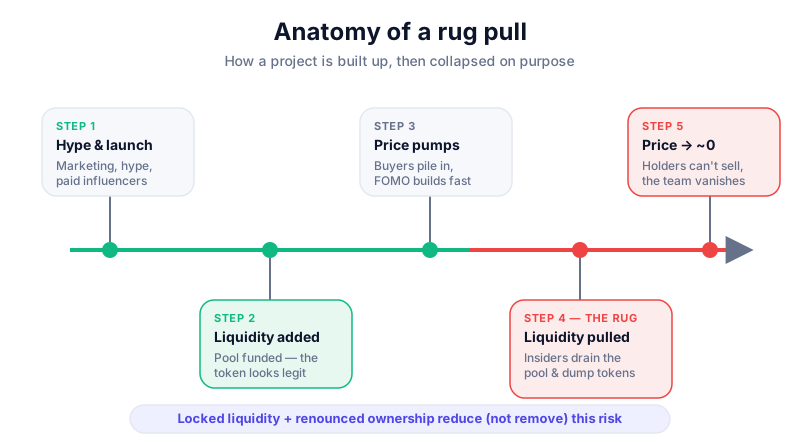
The name comes from 'pulling the rug out' from under someone. In crypto it means the people who launched a token deliberately strip out its value and disappear. Sometimes that's done by draining the liquidity pool that lets the token be traded; sometimes by coding the contract so buyers can never sell; sometimes by simply running off with funds users deposited. Either way, holders are left with tokens that can't be sold for anything.
Rug pulls sit on the scam end of crypto, but they're worth understanding even if you never touch a meme coin, because the mechanics overlap with broader crypto scams. The common thread is that the creators always had the ability to take the money — the only question was when they'd use it.
Rug pull vs hack vs collapse
A rug pull is intentional theft by the project's own team. That's different from a hack (an outside attacker exploiting a bug) or a collapse (a project failing through bad design or bad luck, like the Terra-Luna collapse). The line can blur, but intent is the key distinction.
Some of the most notorious cases
These are among the most-cited rug pulls of recent years. We've stuck to the broad facts rather than precise figures, which vary by source and by the price of crypto on the day.
Squid Game token (2021)
Riding the hype of the Netflix series, this token promised a play-to-earn game and falsely implied a tie to the show. The price spiked dramatically and tens of thousands of people piled in — but buyers found they could purchase the token and never sell it. This is the classic honeypot design, where the contract lets money flow in but not out. The developers then drained the funds and vanished. We dig into the mechanics in honeypot tokens explained.
AnubisDAO (2021)
AnubisDAO raised an enormous sum in under a day, despite having no whitepaper, no documentation and an anonymous team. Within hours of launch, the liquidity was moved out and the project was gone. It's a stark example of how far pure hype and fear of missing out can carry a project that offered almost nothing to verify.
Thodex (2021)
Not a meme coin but a centralised exchange — a reminder that 'rug pull' behaviour isn't limited to obscure tokens. The Turkish exchange Thodex abruptly stopped trading, locking hundreds of thousands of users out of their accounts, and its founder fled the country. He was later caught and handed an extraordinarily long prison sentence. The lesson echoes the FTX collapse: when you don't hold your own keys, you're trusting the people running the platform completely.
Africrypt (2021)
Often cited as the largest by value, this South African operation saw its founders disappear with a huge quantity of Bitcoin, blaming a supposed hack that investigators and creditors widely doubted. It blurs the line between rug pull and outright fraud — but for the people who'd handed over their coins, the outcome was identical.
| Case | Year | What happened | Tell-tale sign |
|---|---|---|---|
| Squid Game | 2021 | Honeypot — buyers couldn't sell, then funds drained | Could buy but not sell |
| AnubisDAO | 2021 | Liquidity pulled within a day of launch | No whitepaper, anonymous team |
| Thodex | 2021 | Exchange halted, founder fled with user funds | Custodial — users held no keys |
| Africrypt | 2021 | Founders vanished with a large Bitcoin stash | Implausible 'hack' excuse |
The patterns they all share
Strip away the specifics and the same ingredients keep appearing. None of these on its own proves a project is a scam, but the more boxes a project ticks, the more carefully you should tread.
- Anonymous teams with no real names, track record or accountability — so there's no one to chase when it goes wrong.
- Urgency and FOMO — limited-time presales, countdown timers and 'you're early' messaging designed to switch off your caution.
- Drainable liquidity — if the creators can withdraw the pool that backs the token, they can empty it in seconds.
- Sell restrictions — honeypot code, sudden 'taxes' on selling, or paused trading that traps holders.
- Concentrated holdings — a few wallets owning most of the supply, ready to dump on everyone else.
- Borrowed hype — leaning on a trend, celebrity or TV show rather than anything the project itself has built.
If you can't sell, you don't really own it
The single most dangerous design is the honeypot, where the price chart only ever goes up because nobody is allowed to sell. A rising price means nothing if you can't actually cash out at it. Always check that selling works — ideally with a tiny test transaction — before committing anything you'd miss.
How to protect yourself
You can't make any meme coin safe, but you can avoid the most obvious traps and refuse the projects that fail basic checks. A few habits filter out a large share of rug pulls. One of the simplest: keep any long-term holdings in your own hands, ideally in cold storage on a hardware wallet like the Ledger Nano X.
- Run the checklist. Before touching a new token, work through how to spot a rug pull and meme coin risks and red flags. Check whether liquidity is locked, whether the contract can mint more coins, and how the supply is distributed.
- Do a test sale. Buy a tiny amount and immediately try to sell it. If the sale fails or charges an absurd fee, walk away.
- Slow down. Urgency is the scammer's main tool. Almost nothing legitimate requires you to act in the next five minutes.
- Hold your own keys. Custodial blow-ups like Thodex hit people who'd left funds on a platform. Read hot vs cold wallets and keep what you can off exchanges.
- Assume you can lose it all. Treat money in any new token as money you've accepted you might never see again.
For the broader toolkit, how to avoid crypto scams covers phishing, fake apps and impersonation alongside rug pulls — the techniques overlap, and scammers rarely use just one.
What to do if you're caught out
If a token you hold turns out to be a rug pull, the hard truth is that recovery is usually impossible — blockchain transactions can't be reversed, and the people responsible are often anonymous and offshore. But there are still sensible steps to take.
- Stop interacting with the project's website or contract, which may try to drain more from your wallet.
- Revoke approvals you gave the token's contract, so it can't move your other funds. See how to revoke token approvals.
- Report it to the relevant authorities and platforms — it rarely recovers funds but helps build cases and warn others.
- Beware 'recovery' scams, where a second fraudster offers to get your money back for a fee. They're preying on the same wound.
Our full guide, what to do if you get scammed, walks through this calmly and in order.
The takeaway
The biggest rug pulls weren't sophisticated — they worked because hype, urgency and the fear of missing out got people to skip the basics. Anonymous teams, drainable liquidity, tokens you can buy but not sell: the script barely changes from one to the next, which is exactly why learning it pays off. Treat any brand-new token as guilty until proven innocent, do the boring checks, and never put in money you can't afford to lose. Crypto is volatile and unregulated in many places, and in this corner of it, losing everything is a normal outcome, not a freak one.
Key takeaways
- A rug pull is deliberate theft by a project's own team — distinct from a hack or an honest collapse.
- Famous cases like Squid Game, AnubisDAO and Thodex share the same patterns: anonymity, hype and drainable funds.
- The deadliest design is the honeypot — you can buy but never sell, so the chart only goes up.
- Lock-checks, test sales and slowing down filter out most rug pulls — but no meme coin is ever truly safe.
- If you're hit, revoke approvals, report it, and watch out for fake 'recovery' services.
Frequently asked questions
Is a rug pull illegal?
In most places it's straightforwardly fraud or theft, and people have been jailed for it — the Thodex founder received an enormous sentence. The practical problem is enforcement: teams are often anonymous and based abroad, and blockchain transactions can't be undone, so prosecutions are slow and recovery is rare.
How can I tell a rug pull before it happens?
There's no guarantee, but check whether the liquidity is locked, whether you can actually sell a test amount, how concentrated the token supply is, and whether the team is identifiable. Our how to spot a rug pull guide turns these into a step-by-step check.
Can I get my money back after a rug pull?
Usually no. Blockchain transactions are irreversible and the culprits are often untraceable. Revoke the token's approvals so it can't drain more, report it to the authorities, and be very wary of anyone promising to recover your funds for a fee — that's typically a second scam.
Keep reading
How to Spot a Rug Pull
A practical guide to spotting rug pulls before they happen: liquidity locks, ownership concentration, contract
How to Avoid Crypto Scams: The Cornerstone Safety Guide
The common crypto scams — fake support, phishing, giveaways, romance and rug pulls — and the simple habits tha
What to Do If You Get Scammed in Crypto
A calm, practical step-by-step plan for what to do immediately after a crypto scam — how to limit the damage,