How to Buy Bitcoin Safely (Step by Step)
You now understand what Bitcoin is and how it works under the bonnet. This lesson gets practical: how to actually buy some, safely, without getting fleeced on fees or fooled by a scam. We'll walk through doing it on a regulated exchange, step by step, flagging each pitfall before you reach it — and then the bit most guides quietly skip, moving your coins somewhere you genuinely control. Read it all before you spend a penny; the order of these steps matters.
The 20-second version
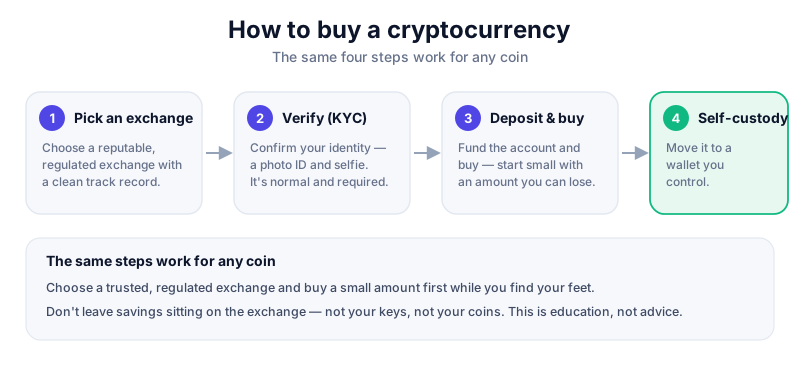
Pick a reputable, regulated exchange, verify your identity, deposit a small amount you can afford to lose, and buy. Then strongly consider moving anything you'd hate to lose into your own wallet. Start small, take your time, and never rush — there's no prize for buying fast, and plenty of regret in it.
Before you buy: a few ground rules
Read this first
Bitcoin's price is highly volatile and can fall as fast as it rises. Never invest money you actually need, never borrow to buy crypto, and treat any amount you put in as money you could lose entirely. This guide is education, not financial advice — there are no price predictions here, and nothing is a recommendation to buy.
It also genuinely helps to understand what Bitcoin is and how it works before you put money in — which is precisely why those were the first two lessons. Buying something you don't understand is how people end up panic-selling at the worst moment or falling for a 'too good to be true' pitch. If lessons one and two still feel hazy, there's no shame in a quick re-read first. This isn't a race, and the market will still be there tomorrow.
One more mindset point. The crypto internet is loud, and a lot of it is people trying to sell you something — a coin, a course, a 'signal group'. The calm, slightly boring approach in this lesson is deliberate. Boring is how you keep your money.
Step 1: Choose a regulated exchange
An exchange is simply where you swap normal money for Bitcoin — think of it as a currency bureau for crypto. There are dozens, and the quality varies enormously, so the single most important factor is trust. Choose one that is well-established, regulated in your country, and has a clean security track record. It helps to compare a couple head-to-head: see Coinbase vs Kraken and Binance vs Coinbase for honest, side-by-side breakdowns. When weighing any exchange up, four things matter most.
- Regulation — is it registered with the relevant financial authority where you live? This is your main layer of legal protection, and a missing registration is a hard no.
- Security — does it offer app-based two-factor authentication and have a history free of major breaches? A long, boring track record is a good sign here.
- Fees — what does it charge to buy, and what does it charge to withdraw Bitcoin to your own wallet? These vary a lot and are easy to overlook until they sting.
- Ease of use — beginners are usually better served by a simpler, well-supported platform than a bewildering pro-trading interface bristling with charts.
Coinbase is one of the most established, regulated exchanges and is easy for first-timers. We may earn a commission if you sign up through us, at no cost to you — and it never changes our verdicts. Read Coinbase vs Kraken first to see how it stacks up.
Step 2: Set up and secure your account
Once you've picked an exchange, the account itself becomes a target. A few minutes of setup here saves a lot of heartache later — and here's the uncomfortable truth most exchange thefts share: they happen because of a weak password or a stolen SMS code, not because the exchange itself was broken into. The weakest link is usually the login, and the login is the one part you control completely.
- Create your account using a strong, unique password — ideally generated and stored in a password manager so you never reuse it anywhere else.
- Turn on two-factor authentication (2FA), preferably with an authenticator app rather than SMS.
- Complete identity verification (known as KYC). Regulated exchanges require this by law; it usually means uploading a photo ID and a selfie, and it's normal, not a red flag.
- Double-check you're on the genuine website or official app — bookmark it, and never follow a login link from an email or DM, no matter how official it looks.
Authenticator app beats SMS
SMS codes can be stolen through 'SIM-swap' attacks, where a fraudster tricks your mobile carrier into moving your number to their phone. An authenticator app (or a hardware security key) keeps the code on a device you physically hold, so it's meaningfully safer. We dig into this in Bitcoin security and scams.
Step 3: Deposit and make your first buy
- Deposit a small amount of money you're genuinely comfortable losing — there's no need to go big just to learn the mechanics.
- Choose Bitcoin (BTC) and enter the amount. You can buy a fraction; you don't need a whole coin or anything remotely close to it.
- Review the total, including all fees, before confirming. A bank transfer is usually noticeably cheaper than paying by card.
- Confirm the purchase. The Bitcoin now sits in your exchange account, ready to use or move.
Take a breath here. Many people stop at this step — and for small amounts on a reputable exchange, that can be perfectly reasonable while you find your feet. But there's a catch worth understanding: the exchange is still holding the keys to your coins on your behalf. You have an IOU from the exchange, not direct control of the Bitcoin itself. That brings us to the most important step in the whole lesson, the one that quietly separates people who keep their Bitcoin from people who lose it.
Step 4: Move it to your own wallet
While your coins sit on an exchange, the exchange controls the keys — and the crypto world's favourite phrase, 'not your keys, not your coins', applies. Exchanges can be hacked, can freeze withdrawals, or in rare but real cases collapse entirely, taking customer funds down with them. It has happened, more than once, to platforms that looked rock-solid. For anything you'd be genuinely upset to lose, learn how to store Bitcoin safely and move it into a wallet you control — ideally a hardware wallet. The next two lessons cover exactly that.
- Set up your wallet and securely back up its seed phrase on paper, stored offline. Never photograph it or type it into a computer.
- Copy your wallet's receive address carefully — or scan its QR code to avoid typos, which can send funds into the void.
- Send a tiny test amount first and confirm it arrives in your wallet before moving anything more. Five minutes of patience here can save everything.
- Once the test lands safely, transfer the remainder.
A hardware wallet like the Ledger Nano X keeps your keys offline and out of reach of hackers. We may earn a commission at no cost to you, and it never changes our verdicts — buy direct from the manufacturer only, never second-hand.
Avoiding the common traps
The moment you own crypto, scammers want it. The reassuring news is that nearly all of them lean on the same handful of tricks, so once you know the pattern you'll spot it a mile off. None of these are clever; they just rely on excitement or fear getting ahead of judgement.
- Ignore anyone promising 'guaranteed returns', 'doubling' your Bitcoin, or a celebrity giveaway — it is always a scam, with no exceptions, ever.
- No legitimate service will ever ask for your seed phrase. Never share it, never type it into a website, no matter how official the page looks.
- Beware fake apps and lookalike websites — only ever use official sources you've bookmarked yourself, and check the spelling of the address.
- Treat unsolicited 'investment advisors', romance-then-crypto pitches, and urgent DMs as red flags and walk away. Real opportunities don't slide into your messages.
That's lesson three: you can now buy Bitcoin and move it somewhere safer. Next we'll go deep on storage, but for a fuller defence against fraud, lesson six covers Bitcoin security and scams and you can also read up on fake exchange scams.
Key takeaways
- Use a reputable, regulated exchange and start with a small amount you can afford to lose.
- Secure your account with a strong, unique password and app-based 2FA — not SMS.
- Fees and method matter — bank transfers usually beat card payments, so check the total first.
- For meaningful sums, move your Bitcoin off the exchange into a wallet you control.
Frequently asked questions
How much do I need to start?
Very little. Bitcoin divides into tiny units, so you can buy a few pounds' or dollars' worth to learn the ropes before ever doing anything larger. Starting small is the smart way to learn, not a beginner's compromise.
Should I leave my Bitcoin on the exchange?
For small amounts or active trading, it's convenient and often fine. But the exchange holds the keys and can be hacked or freeze withdrawals, so larger holdings are safer in self-custody where you control the keys.
Is buying Bitcoin legal?
In most countries, yes, and regulated exchanges operate openly. Rules and taxes vary, though — check the crypto tax rules where you live, as selling or spending can be a taxable event you'll need to report.
Keep reading
What Is Bitcoin? A Plain-English Guide
A beginner-friendly explanation of what Bitcoin is, how it works, and how to think about it — with no hype and
How Bitcoin Works (Without the Jargon)
A clear walk-through of how Bitcoin actually works: the blockchain, mining, transactions, the 21 million cap,
How to Store Bitcoin Safely (Step by Step)
Keep your Bitcoin safe from hackers and mistakes: hot vs cold wallets, hardware wallets, seed-phrase backups,