How Presales Fake Their 'Total Raised' Meters (And How to Check in 3 Steps)
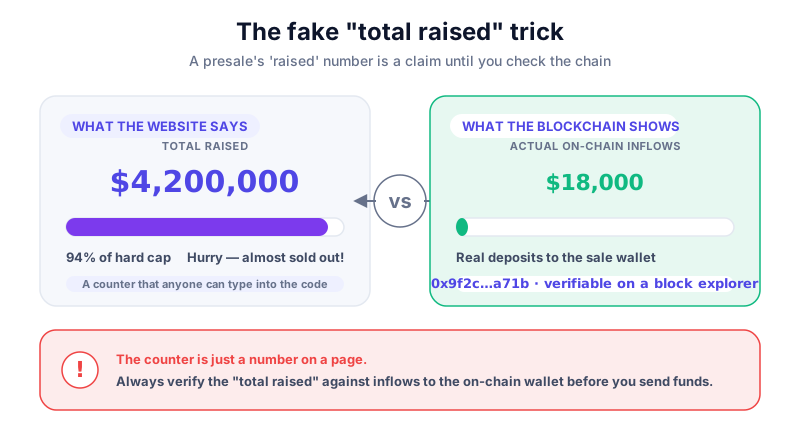
That '$14,283,912 raised' counter ticking up on a presale homepage? It's a number typed into a webpage — nothing more. Sometimes it's true. Often it isn't. The good news: because crypto runs on public blockchains, you can audit the real figure yourself in about five minutes, free, and the scammers can't do a thing about it.
The 20-second version
Find the presale's real deposit address (it's in the page's own code), paste it into a block explorer like Etherscan or BscScan, and compare the ledger against the website's claims. An empty wallet behind an eight-figure counter, a handful of transactions behind 'thousands of buyers', or the same address 'buying' in a loop — any one of those ends the conversation.
Why the counter lies
A fundraising meter has one job: make you feel late. 'Everyone else is in — the smart money's already moved — hurry.' It's the same psychology as the resetting countdown and the '98% sold out' bar, and on a scam site all three come from the same place: a line of code the owner controls, not the blockchain.
Honest projects have nothing to fear from being checked, because their numbers reconcile. Scam factories rely on the fact that almost nobody looks. This guide makes you one of the people who looks.
Step 1 — Find the real deposit address
Every presale that accepts crypto has to tell your wallet where to send it — which means the address is in the page somewhere, even when it isn't displayed.
- The easy route: click the buy button (without connecting a wallet or sending anything) — many sites display the contract or deposit address at that point. Copy it.
- The reliable route: right-click the page and choose Inspect (or press F12), open the search with Ctrl+F / Cmd+F, and search for
0x. You're looking for a 42-character code starting0xnear words like *contract*, *address* or *presale*. - On Solana-based sales, addresses look different (a long run of letters and numbers, no
0x) — search for *address* or *wallet* instead.
Do this without connecting
You never need to connect a wallet to investigate. Connecting to a malicious site and signing anything is how wallet drainers work — look, don't touch.
Step 2 — Look the address up on a block explorer
Paste the address into the explorer for that chain: etherscan.io for Ethereum, bscscan.com for BNB Chain, basescan.org for Base, solscan.io for Solana. What you're now reading is the actual ledger — the record the presale can't edit. If block explorers are new to you, how to read a block explorer is a five-minute primer.
Two numbers matter: the balance (plus token holdings) and the transaction list — how many deposits, how big, how often, and from how many different addresses.
Step 3 — Compare the ledger against the claims
Now hold the website's story up against the chain, and look for the three classic fakes:
- The zero-balance trap. The site claims $20 million raised; the wallet holds $400. Either the counter is fiction, or funds are being swept out the moment they arrive — neither is a place for your money. (Funds moving instantly to fresh unlabelled wallets or mixers is the *drain* pattern.)
- The ghost-crowd flag. 'Over 12,000 holders!' but the transaction tab shows nine deposits this week. Buyer counts are the easiest number to invent because most visitors never check.
- The internal loop. The same address sends large 'purchases' in and out, over and over, to simulate demand. Click the biggest incoming transactions — if the same few wallets circulate the same funds, the 'raise' is the team buying from itself.
Multiple wallets?
Some sales rotate deposit addresses, so one quiet wallet isn't instant proof. But the burden of proof sits with the project: if the site claims a huge raise and can't point to addresses that show it, treat the claim as false.
Whatever you find, screenshot it and note the address — that's your receipt. It's exactly the method we use for every teardown in Scam Watch, and it's the evidence standard worth demanding from anyone who tells you a presale is 'verified'.
What to do with what you found
If the numbers don't reconcile: walk away, warn anyone who invited you, and consider reporting the promotion — unauthorised crypto promotions to UK consumers are a criminal offence, and reports genuinely lead to takedowns. If you already sent funds or connected a wallet, follow the emergency steps now — minutes matter with token approvals.
And remember the deeper lesson: your crypto is only as safe as where its keys live. Coins on a website dashboard are promises; coins in cold storage on your own hardware wallet are property.
Key takeaways
- A fundraising counter is website text — the blockchain is the only ledger that counts
- The deposit address is always findable: buy-button screen or Inspect Element + search for 0x
- Zero balances, ghost crowds and internal loops are the three classic fakes
- Screenshot what you find — evidence, not vibes, is what protects the next person
- Never connect a wallet just to investigate a suspicious site
Frequently asked questions
The wallet really does hold millions — so it's legit?
It proves the raise, not the intentions. Plenty of rug pulls collected real millions and vanished. A true counter passes one check; the team, audit and whitepaper checks in our full presale guide decide the rest.
What if I can't find any deposit address at all?
Treat that as a red flag on its own. Legitimate sales publish their contract address prominently, precisely so buyers don't get phished by fakes. Hidden money flow means someone prefers you not to look.
Do I need to pay for any of these tools?
No. Block explorers are free public infrastructure, and Inspect Element is built into every browser. The whole audit costs five minutes.
Keep reading
How to Check If a Crypto Presale Is a Scam (Step by Step)
The complete pre-flight check for any crypto presale: verify the team, the whitepaper, the audit and the actua
How to Read a Block Explorer
A beginner's guide to block explorers: how to look up a transaction, read confirmations and fees, check an add
Wallet Drainer Scams Explained
How wallet-drainer scams trick you into signing a malicious transaction that empties your wallet in seconds —