What Is a Blockchain Node?
A blockchain is really just thousands of computers keeping the same record in sync. Each of those computers is a node. Understanding nodes is the key to understanding why crypto can work without a central server in charge.
The 20-second version
A node is a computer running a blockchain's software. It stores a copy of the ledger, checks that new transactions and blocks follow the rules, and shares them with other nodes. The more independent nodes there are, the harder the network is to control or shut down.
What a node does
Picture thousands of accountants worldwide, each keeping an identical copy of the same ledger. When a new transaction appears, every accountant checks it against the rules and updates their copy only if it's valid. That's roughly what a node does — automatically, in software.
Because every node verifies for itself, no single one has to be trusted. If one tries to cheat by accepting an invalid block, the others simply reject it. This independent checking is what makes a blockchain hard to corrupt.
The main types of node
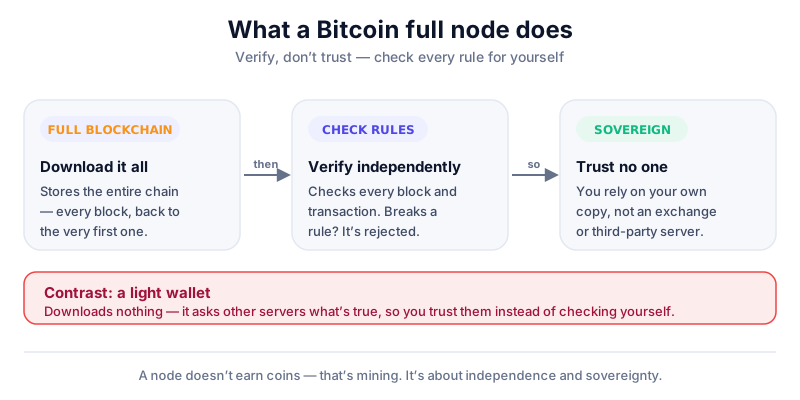
- Full nodes store and verify the entire blockchain history. They're the backbone of decentralisation.
- Light nodes keep only part of the data and rely on full nodes for the rest — handy for phones and wallets.
- Validator or mining nodes go further: they don't just check blocks, they help *create* them. On proof-of-stake chains these are called validators; on proof-of-work chains they're miners.
Why nodes matter to you
The number and spread of independent nodes is a rough measure of how decentralised a network really is. A chain run by a handful of nodes is far easier to pressure or censor than one with tens of thousands spread across the world.
Running your own full node lets you verify the blockchain yourself rather than trusting someone else's server — the strongest form of 'don't trust, verify'. It costs nothing but some disk space and bandwidth, though most beginners are fine relying on their wallet's nodes at first. And however you weigh the trade-offs, keep meaningful holdings in cold storage — a Trezor Safe 5 — rather than on an exchange.
You don't need to run one to use crypto
Wallets and exchanges connect to nodes for you. Running your own is a privacy and independence upgrade, not a requirement — and it never involves sharing your seed phrase with anyone.
Key takeaways
- A node is a computer running a blockchain's software and storing its ledger.
- Full nodes verify everything; light nodes rely on them; validators help build blocks.
- More independent nodes means a more decentralised, censorship-resistant network.
- You can use crypto without running a node — your wallet uses one for you.
Frequently asked questions
Do I need to run a node to own crypto?
No. Your wallet or exchange connects to nodes on your behalf. Running your own is optional and mainly improves privacy and self-reliance.
What's the difference between a node and a miner?
Every miner is a node, but not every node mines. Plain nodes verify and relay data; miners (or validators) also compete to add new blocks.
Is running a node profitable?
A plain full node earns nothing — it's about verification and decentralisation, not income. Only validator or mining nodes earn rewards, and those carry their own costs and risks.
Keep reading
What Is Blockchain Consensus?
How thousands of strangers' computers agree on a single shared ledger without a boss. A plain-English guide to
Proof of Work vs Proof of Stake
The two main ways blockchains secure themselves, compared plainly: how each works, their trade-offs, and what
What Is a Crypto Transaction?
What happens when you send crypto: how a transaction is signed, confirmed and recorded, why fees and confirmat